

Margiela: In The Void
Margiela: In The Void
The journey of a museums acquisition of full vintage runway looks is a privileged one to witness. MARGIELA: IN THE VOID is an exhibition concept by Byronesque and Parodi Costume Collection (PCC) that presents some major Margiela pieces, with an unexplored narrative around the voids – the missing items that would otherwise make up full looks.
Parodi Costume Collection and Byronesque presents MARGIELA: IN THE VOID, ran from Dec 12th, 2023, until April 5th, 2024. All photos by David Gary Lloyd.
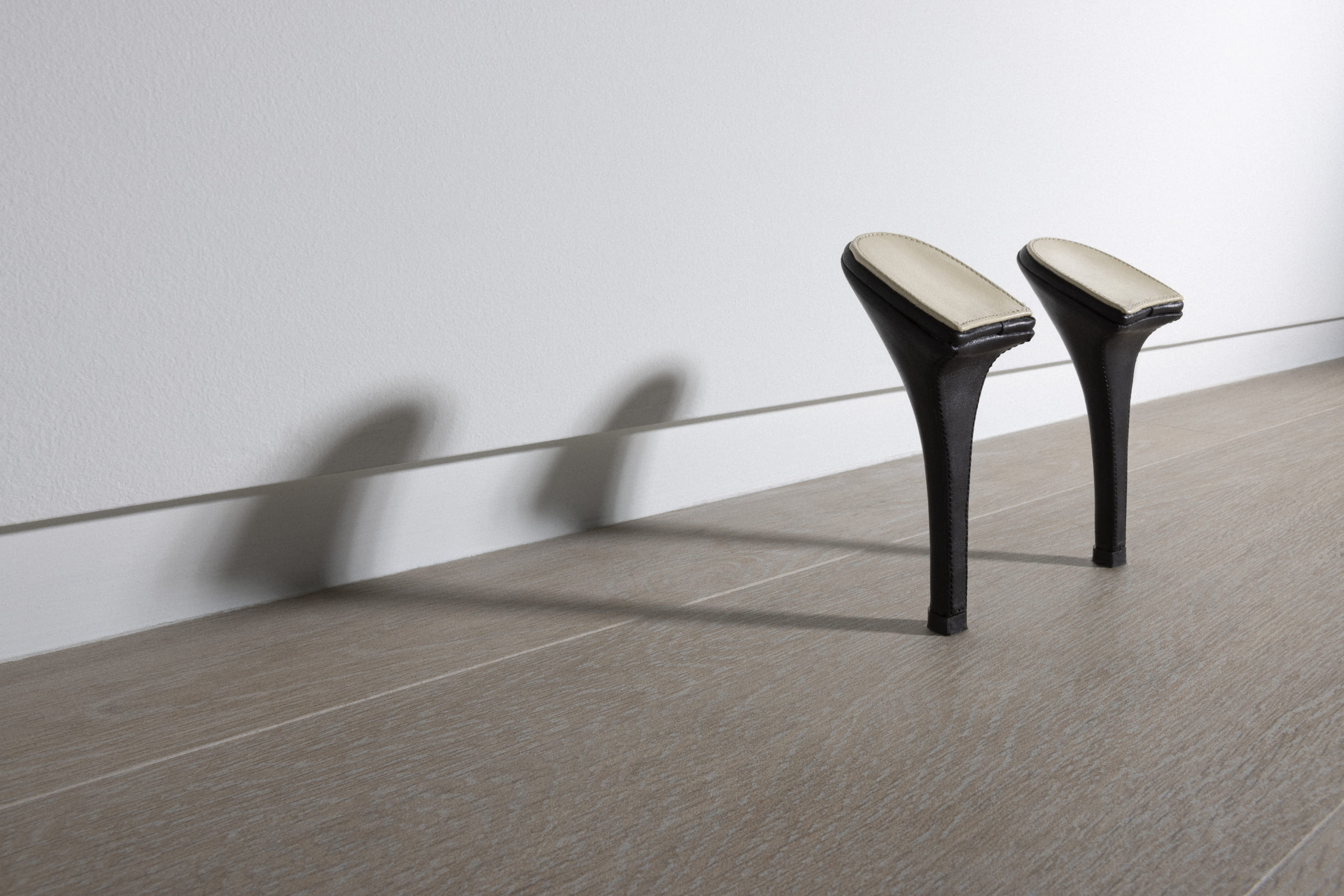
Martin was famously absent. Our idea to focus on the voids taps into his personality as a designer and goes deep into the literal and metaphorical voids surrounding each piece. Museums are traditionally protective of their acquisitions. This idea allows people to witness full looks being created in real time. And with the exhibition launching during Art Basel, it was an opportunity to be more abstract and conceptual, than simply presenting clothes on mannequins.
For the past years, Parodi Costume Collection (PCC) has been carefully adding key pieces of Martin Margiela’s seminal designs to its archive. Margiela’s work resonates deeply with PCC’s focus on critical thinking about fashion, and its mission to educate, by exploring the many visual and ethical dimensions of his work.
The Parodi Costume Collection is extraordinarily progressive for a place dedicated to the past. We’re lucky to have their partnership to tell a different, unexplored side of Martin Margiela.
Gill Linton wrote the didactics explaining the voids for each item on display, including a poetic tribute to Martin, co-written by Gill Linton with Alexandre Samson, that is the poignant finale void of the exhibit.
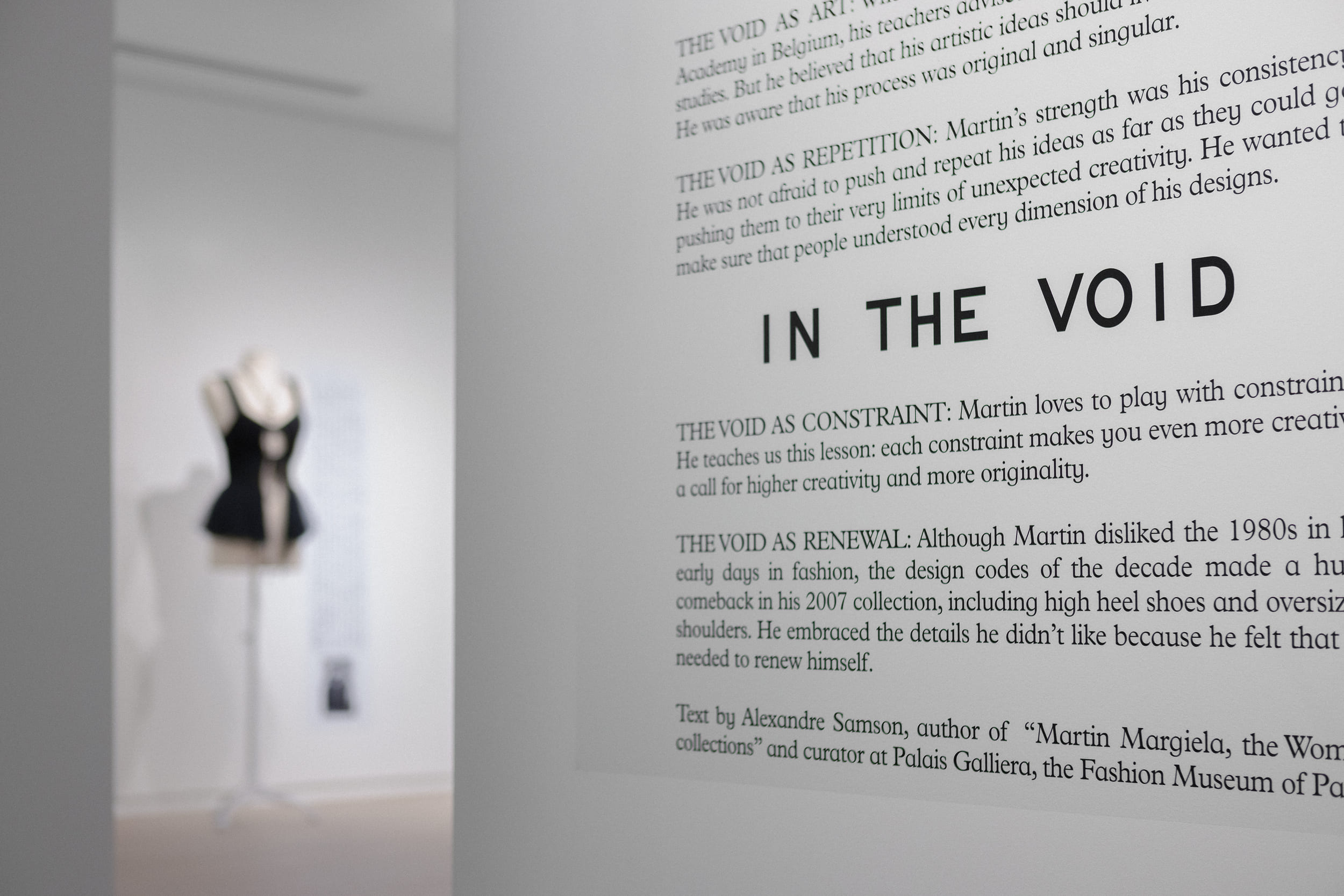
Introductory text by Alexandre Samson, author of “Martin Margiela, the Women collections” and curator at the Palais Galliera, the Fashion Museum of Paris.
Margiela: In The Void
The void as individual
By stepping back from media, refusing interviews and portraits, Martin Margiela created a void in the history of fashion, which has always been obsessed with transforming designers into icons. His void destroyed the status of the traditional designer.
The void as a label
Martin disliked when a garment was chosen for its label over its design. That’s why he chose an empty white label attached with the now famous four corner stitches.
The void as anonymous repurposed garments
There was no ecological motive or process behind his Artisanal line. It began because the price of existing garments was substantially cheaper than brand new fabrics, with unlimited supply. And because Martin, as a fan of the ‘70s, loved vintage clothes.
The void as honesty
He was very transparent about his working process. For the Artisanal line, he identified all the salvaged clothes used to make each garment. He kept the soul, and symbolism of the original clothes alive.
The void as art
When Martin started school at the Antwerp Academy in Belgium, his teachers advised him to change fashion for art studies. But he believed that his artistic ideas should live through clothes. He was aware that his process was original and singular.
The void as repetition
Martin’s strength was his consistency. He was not afraid to push and repeat his ideas as far as they could go. Pushing them to their very limits of unexpected creativity. He wanted to make sure that people understood every dimension of his designs.
The void as constraint
Martin loves to play with constraints. He teaches us this lesson: each constraint makes you even more creative, a call for higher creativity and more originality.
The void as renewal
Although Martin disliked the 1980s in his early days in fashion, the design codes of the decade made a huge comeback in his 2007 collection, including high heel shoes and oversized shoulders. He embraced the details he didn’t like because he felt that he needed to renew himself.
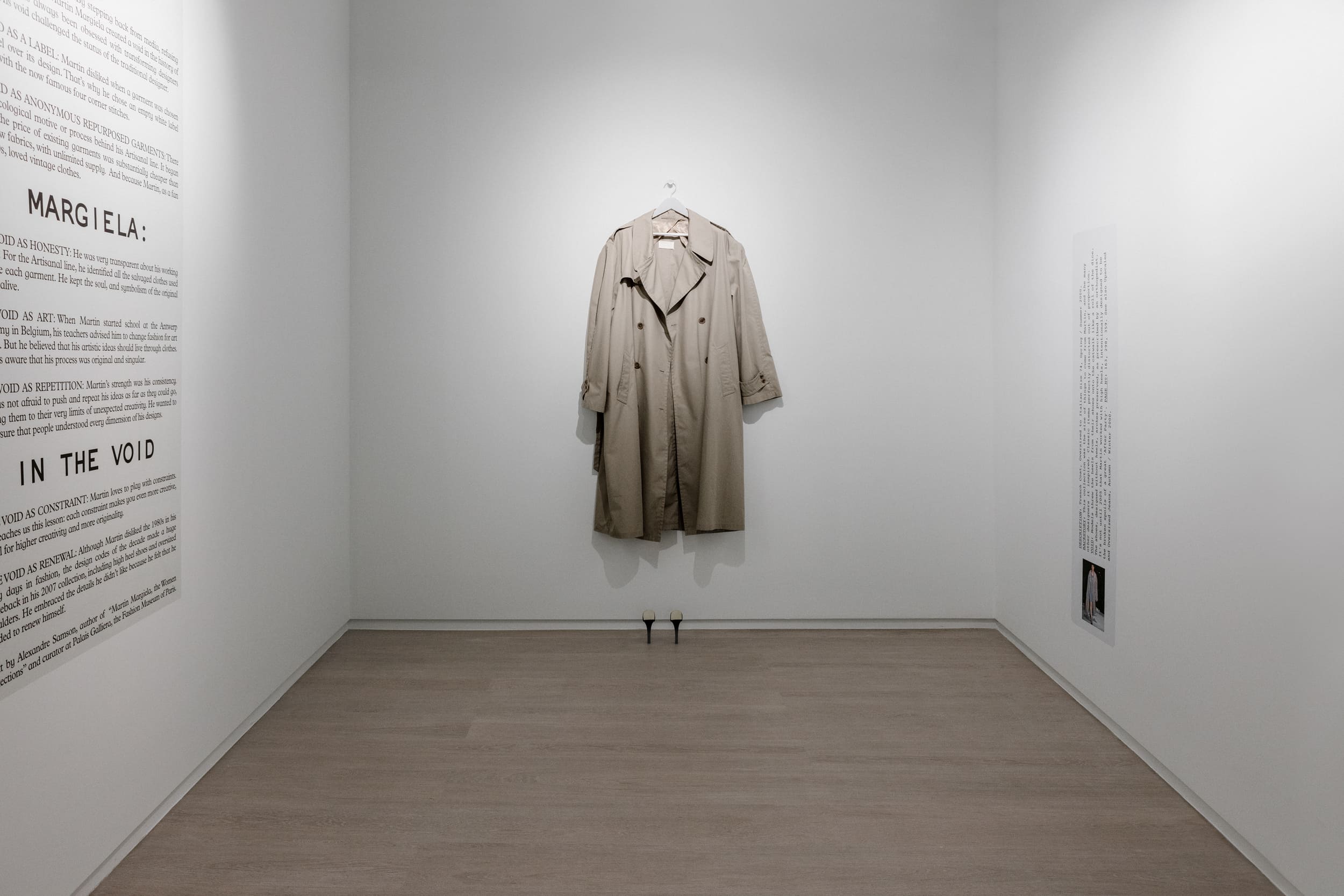
Description: Trench Coat, Oversized to Italian Size 74, Spring / Summer 2000. Backstory: This collection was the size of things to come from Martin, and the many other designers it inspired. Classic items perfectly distorted out of proportion. Void: Models threw the heels from their shoes onto the catwalk like a roll of the dice. The shoes, designed without heels, arches preserved, as prescribed by an orthopedist. It’s not until 2005 that Martin worked with high heels, intentionally designed to be the broken spoils of a great ‘After Party’. Page Nº: 163, 298, 359. See also Upscaled and Oversized Jeans, Autumn / Winter 2000.
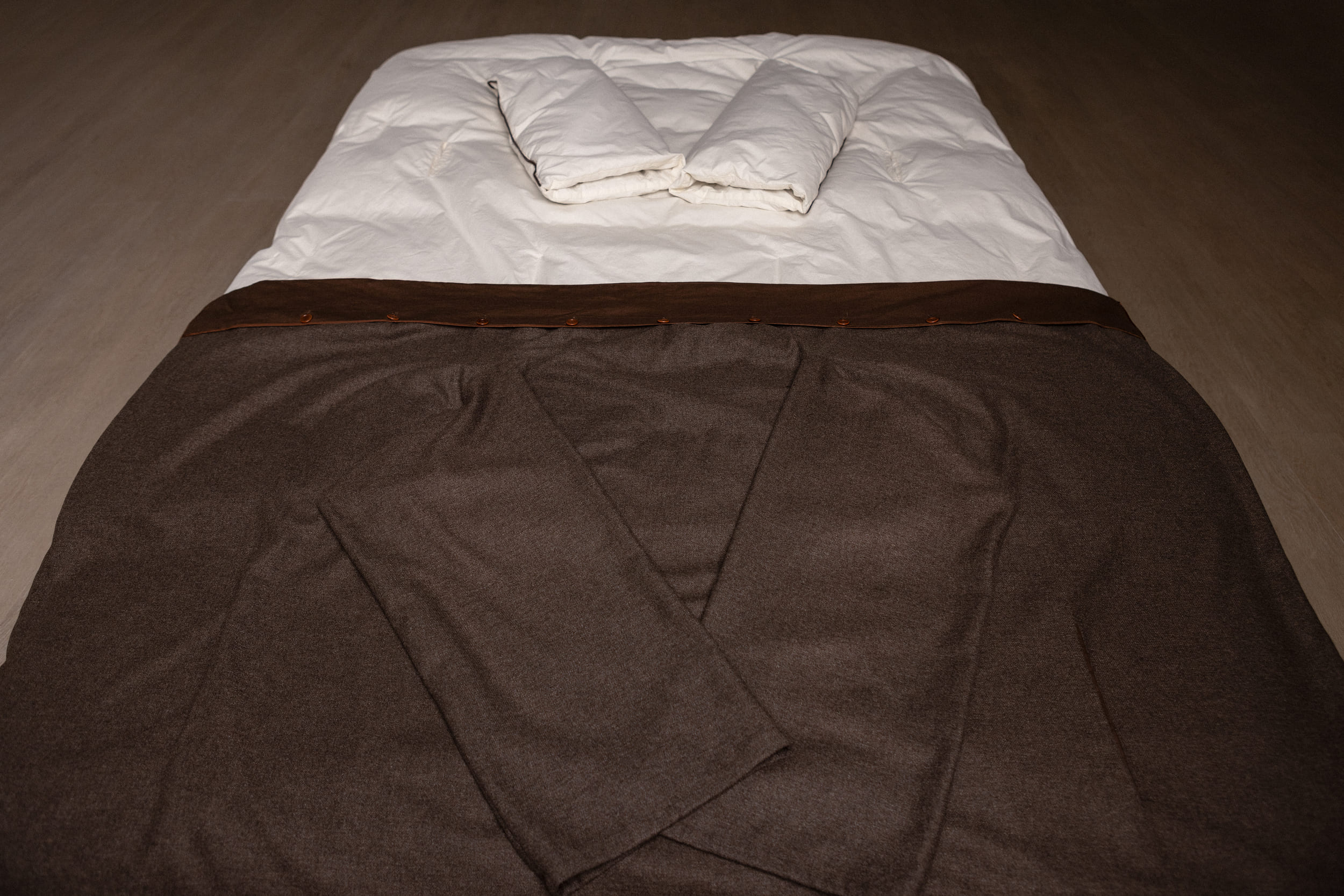
Description: Down Comforter Duvet Coat and Cover, Autumn / Winter 1999. Backstory: Made in collaboration with Featherlight Duvet manufacturers. More of Martin’s use of everyday objects, this coat is not inspired by a duvet it is an actual duvet. Shown with an overdyed vintage army blanket fabric cover that functionally fit together. Void: The bed. And a coat; impenetrable in the cold, impossible to wear in the rain without a plastic cover. Page Nº: 167,169. See also Overdyed and Upcycled Prom Dress Top, Spring / Summer 1994, worn with ‘Solar Clock Ring’ Necklace Spring / Summer 1991 and Salvation Army Dress, Autumn / Winter 1992.
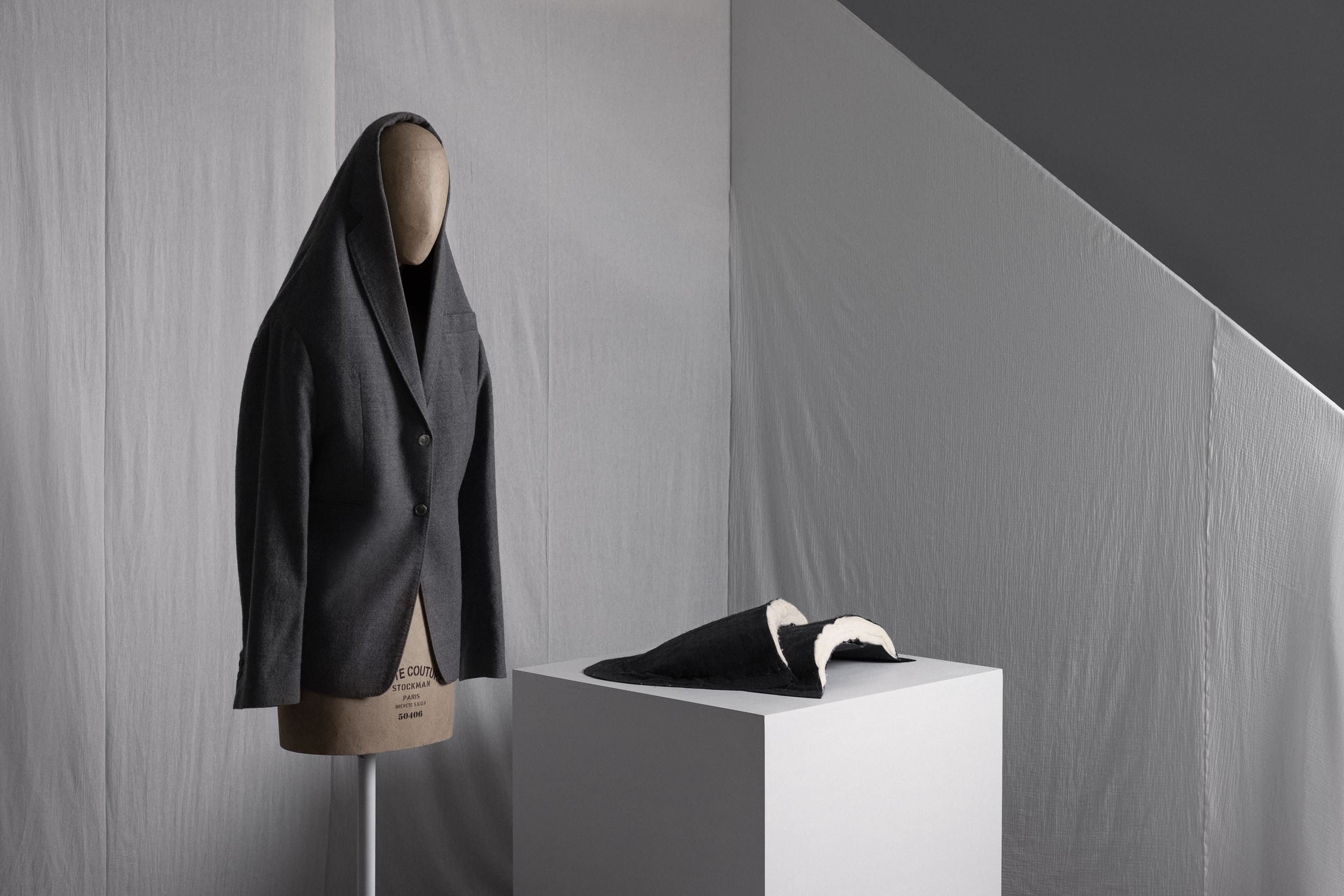
Description: Jacket with Elongated Collar, Autumn / Winter 2005. Backstory: Designed from Martin’s dislike of ‘80s oversized shoulder pad fashion, this shoulder-less jacket earned the ‘hunchback jacket’ nickname, inspired by women’s intuitive gesture of lifting coats over their heads to protect themselves from the rain. Void: There are no shoulders or shoulder pads in this collection, only an elongated void creating garments with extended hoods and visor like collars; a functional nod to anonymity. Page Nº: 27, 269, 311. See also Mirrored Incognito Glasses, Spring / Summer 2008.
Shoulder Pads by Spallinificio BM S.r.l.
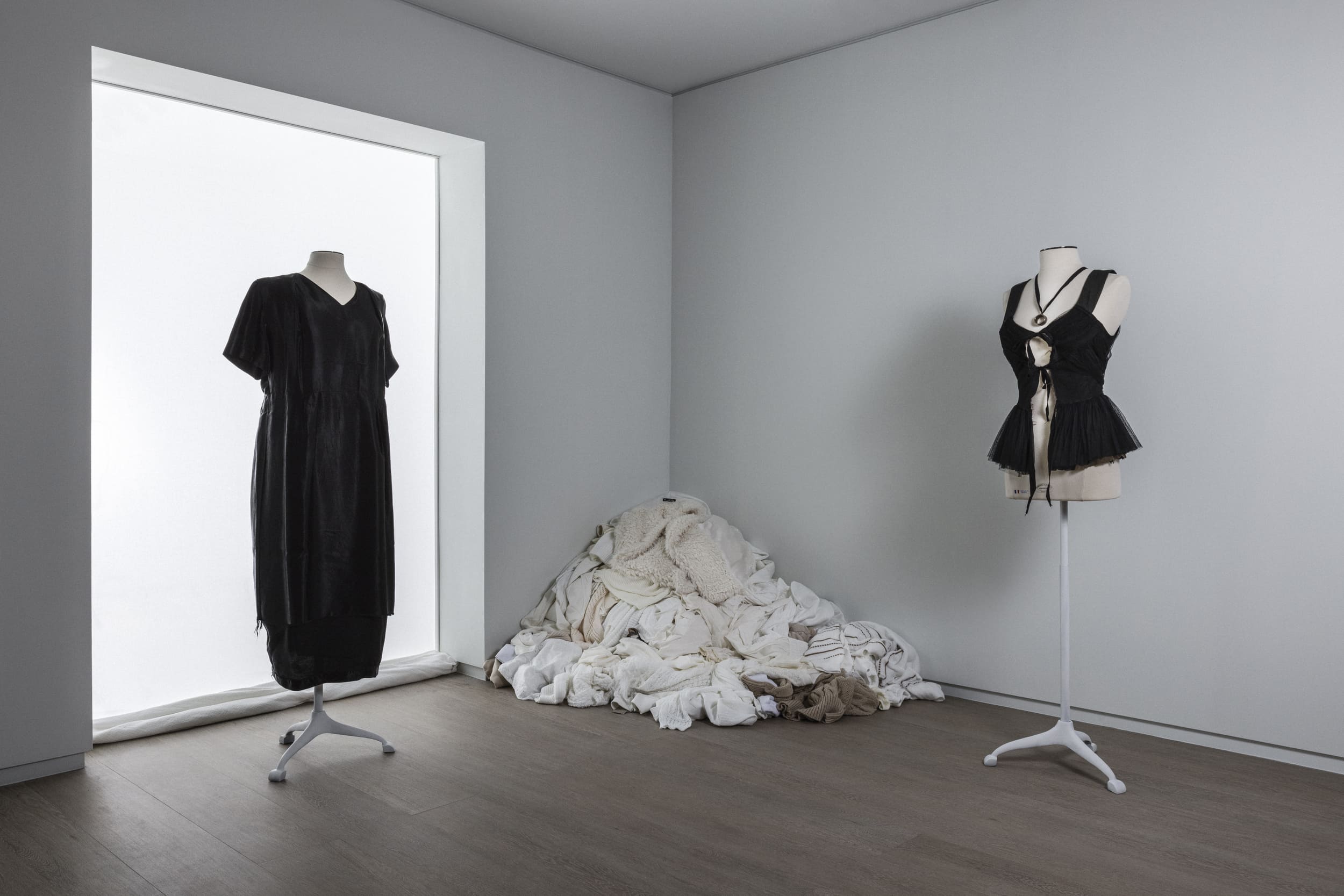
Description: Upcycled Prom Dress Top, Spring / Summer 1994, worn with ‘Solar Clock Ring’ Necklace Spring / Summer 1991, presented with Salvation Army Dress, Autumn / Winter 1992. Backstory: Spring 1994 repeated previous Margiela designs, entirely overdyed in grey. The prom dress top is an interpretation of the original flea market dress from S/S 1991. It took critics a while to catch up to Martin’s pioneering approach to reusing clothes. The Salvation Army collection was so called after a previous season review uncharitably compared it to charity donations. Martin didn’t care, he pushed it to its creative limits. Void: With evolving themes of reuse and re-imagining fashion, fast fashion and over production were very absent. Page Nº: 84, 141, 209, 245.
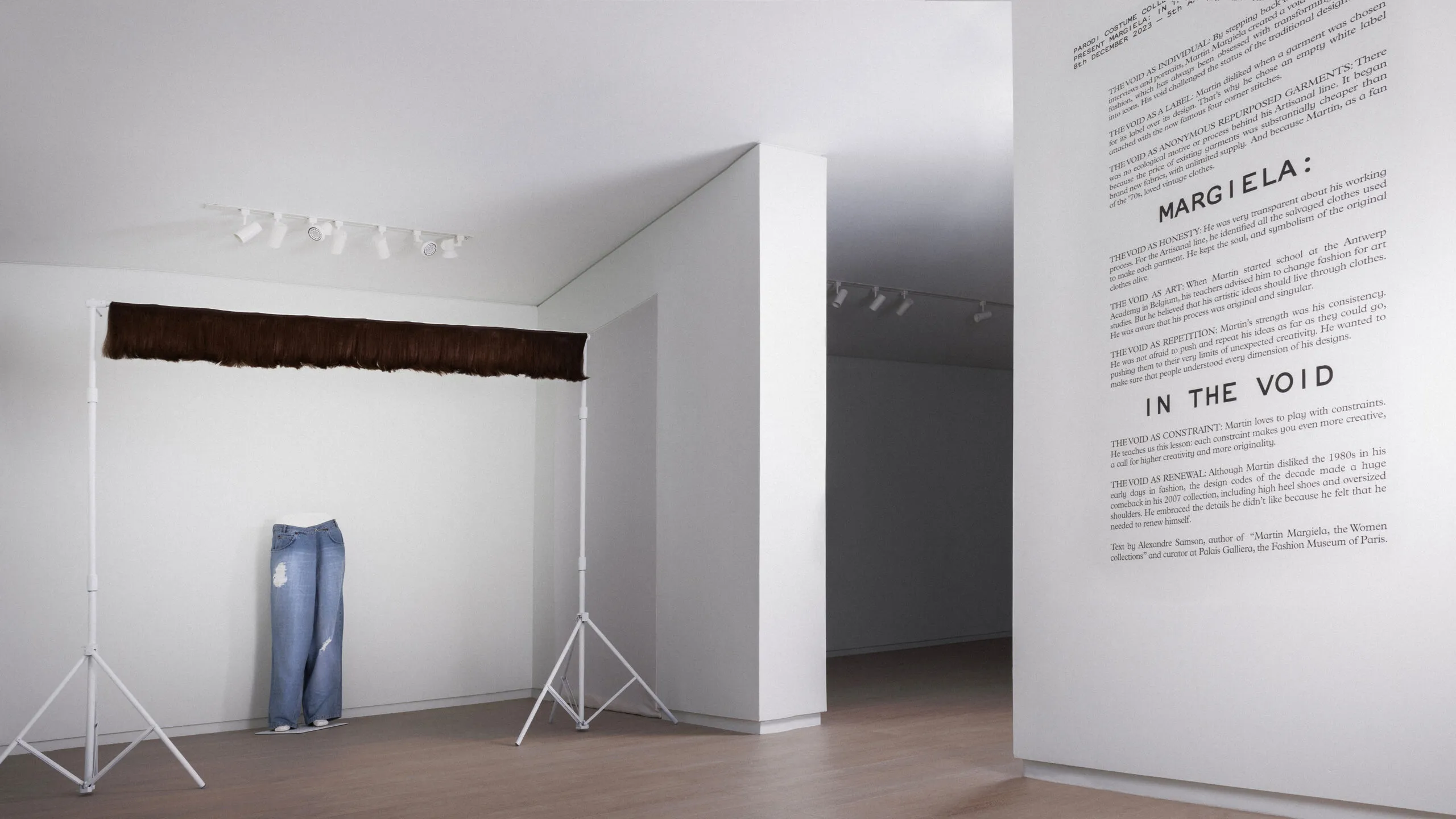
Description: Upscaled and Oversized Jeans, Autumn / Winter 2000. Backstory: An evolution of Spring / Summer 2000’s oversized collection, these jeans are enlarged to an Italian size 78. They remain one of the most sought-after items from Martin’s fashion history. Void: This oversized collection was designed as if to float around the body, but look at this collection from the model’s perspective, one of obscured anonymity, the model is once again missing. Page Nº: 120. See also Trench Coat, Spring / Summer 2000 and Mirrored Incognito Glasses, Spring / Summer 2008.
Fringe Wig by Dawn Victoria Dudley.
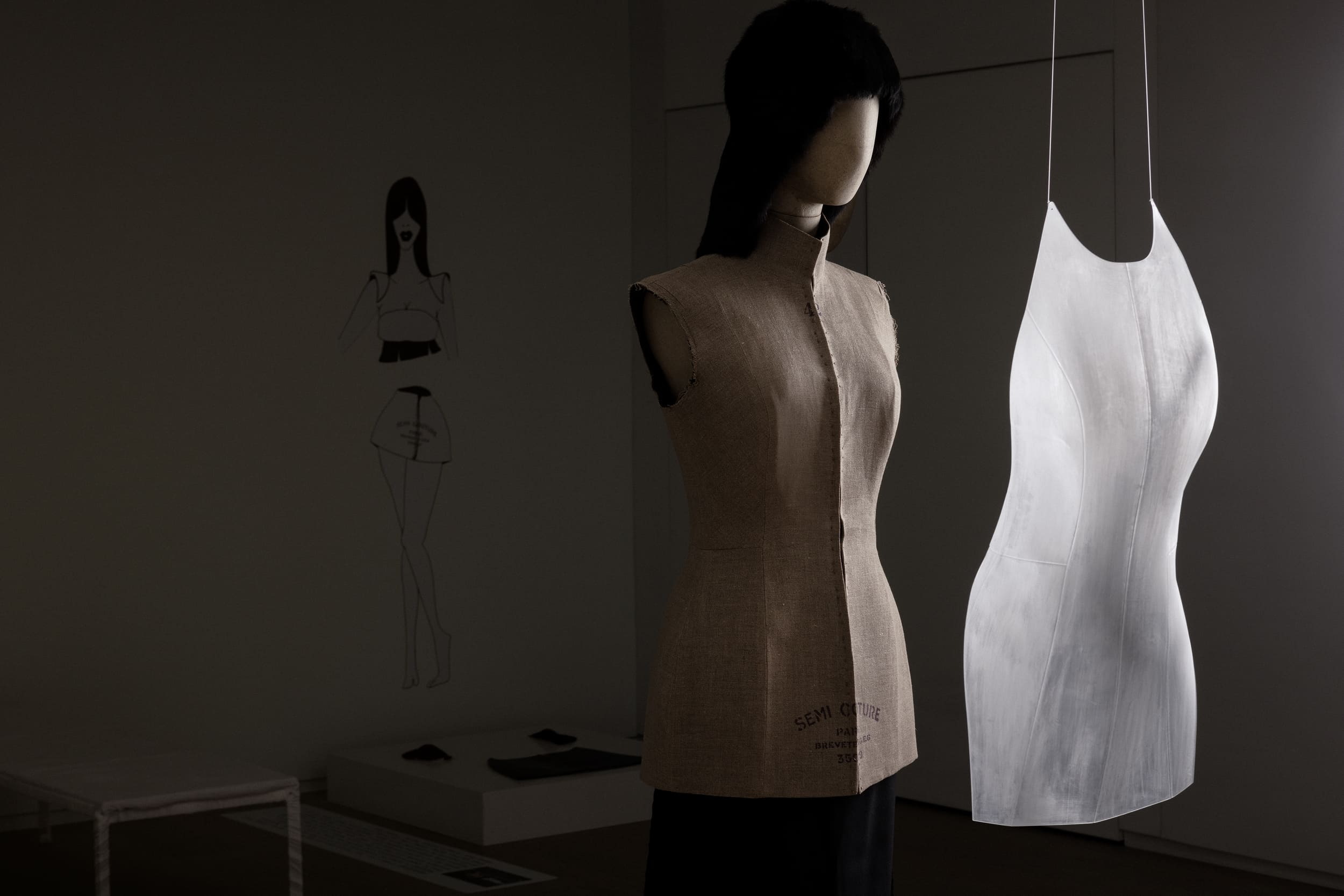
Description: Semi-Couture Stockman Jacket, shown with Selvage Tailors Fabric Skirt, Autumn / Winter 1997 and leather Thigh Tabi boots, Autumn / Winter 2001. Backstory: This collection is as meta as Martin Margiela gets. Clothes designed like the skins of a Stockman mannequin bust, pinned with wearable patterns, a commercialized glimpse into the haute-couture process. Void: The Stockman bust was transformed into a variety of wearable shapes and silhouettes, and like the mannequin itself was dressed up with layers of ideas. Page Nº: 154, 194, 204, 270, 275, 289, 300,
354. See also Trompe L’oeil Semi Couture skirt and shoulder pads, Spring / Summer 1999.
3D Apron design by No More Mondays.
3D Printing by Romi and Atelier Pras.
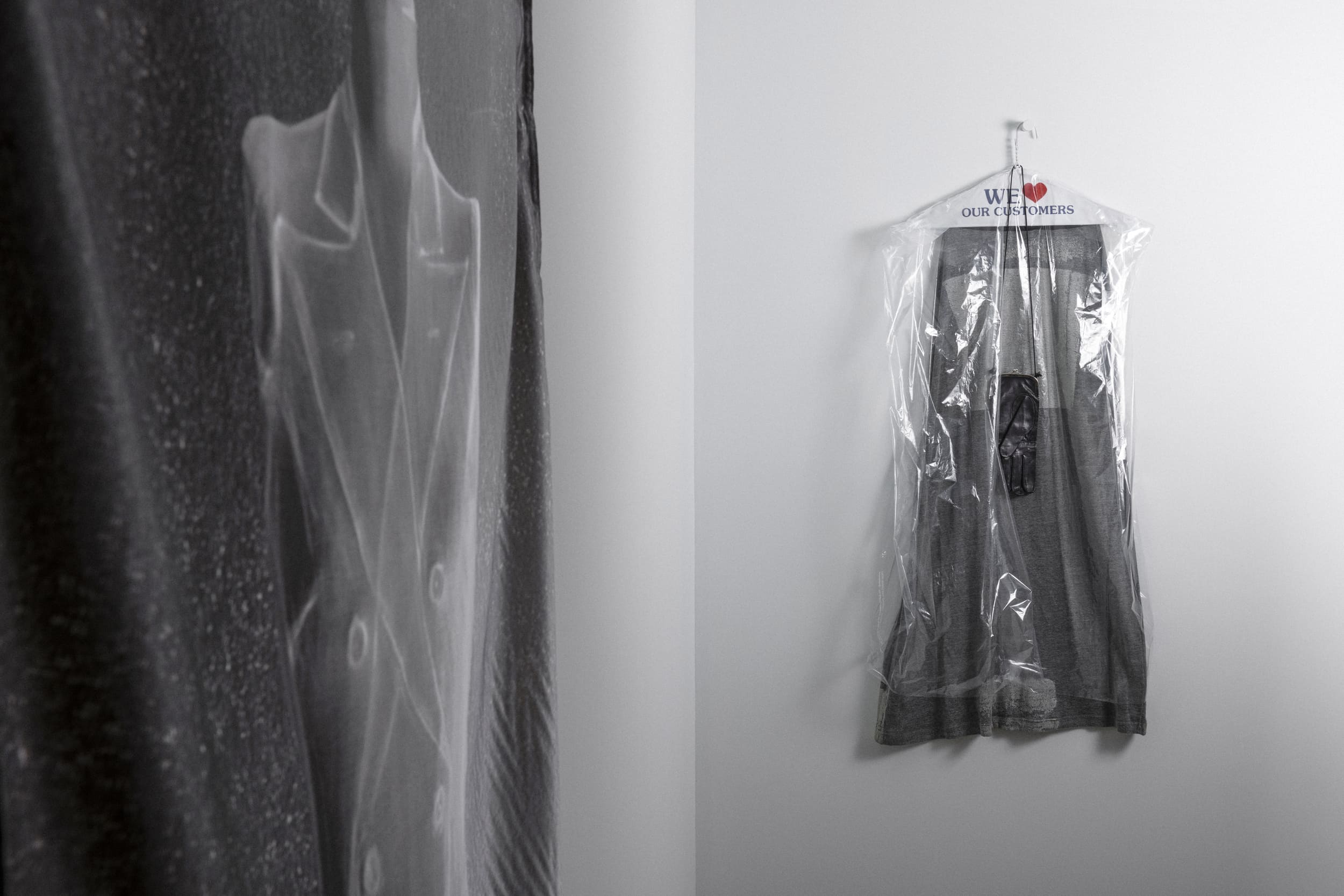
Description: Grey Painted Maxi Skirt and Leather Glove Coin Purse, Autumn / Winter 1998. Backstory: This was the first time Martin collaborated with a stylist for a show while he was busy also designing Hermes or the first time. And, also why Martin Margiela became a collective Maison Martin Margiela. While the collection was an evolution of the ‘Maison’s’ mostly flat and plastic past, it was also the debut of the glove purse. Void: Plastic has been a consistent Margiela material; taped on tabi soles, garment bags as jackets, supermarket bags as tank tops and dry cleaner covers molded into dresses, lead to this plastic wrapped marionette moment. Page Nº: 214.
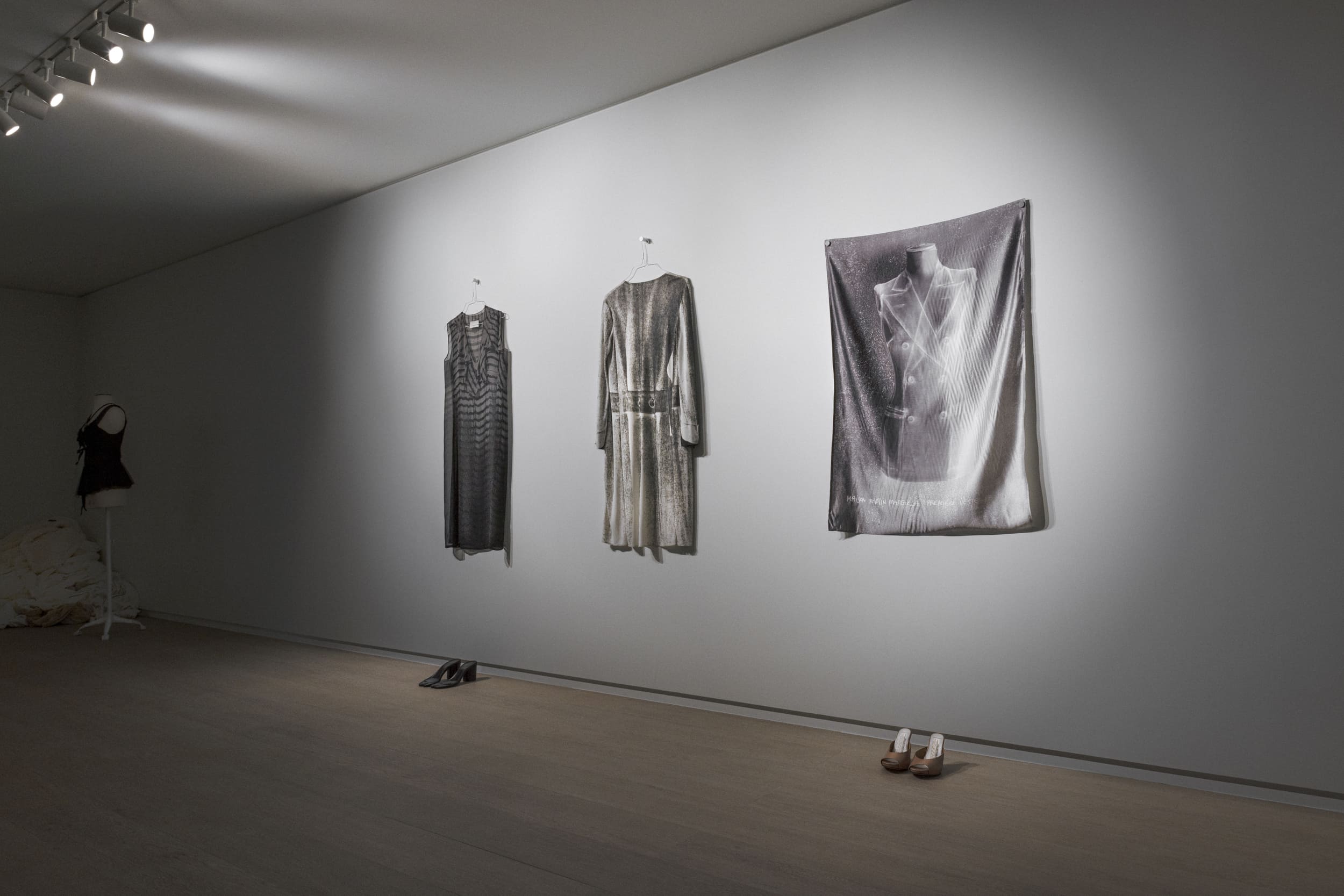
Description: Trompe L’oeil Dress and Coat shown with Tabi Soles, Spring / Summer 1996, presented with Trompe L’oeil First Jacket Poster and Undersized Mules, 20th Anniversary Collection 2009. Backstory: A precursor to the Flat collection and the first time Martin created a print rather than reusing vintage printed fabrics. Concepts underlined with the ultimate flat object in ’09s poster. Void: A 1970’s woman’s striped chiffon day dress with draped v-neckline presented with a 1930’s man’s double breasted Shetland overcoat. Photographed but printed only using the negatives; even the photograph is missing and Martin’s chosen clothes from the past become entirely new for the first time. Page Nº: 130, 256, 266. See also Trompe L’oeil Semi Couture skirt, Spring / Summer 1999.
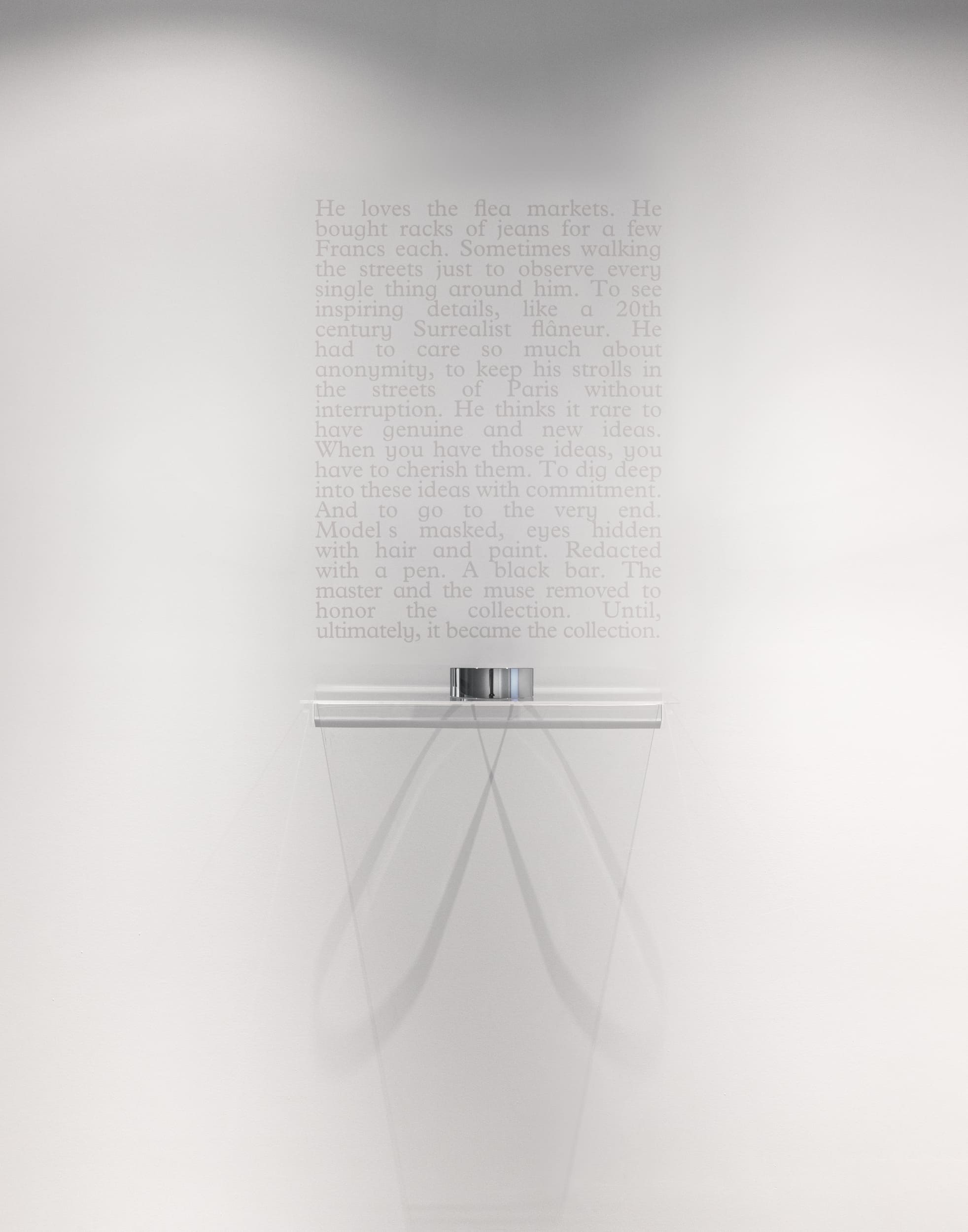
He loves the flea markets. He bought racks of jeans for a few Francs each. Sometimes walking the streets just to observe every single thing around him. To see inspiring details, like a 20th century Surrealist flaneur. He had to care so much about anonymity, to keep his strolls in the street of Paris without interruption. He thinks it rare to have genuine and new ideas. When you have those ideas, you have to cherish them. To dig deep into these ideas with commitment. And to go to the very end. Models masked, eyes hidden with hair and paint. Redacted with a pen. A black bar. The master and the muse removed to honor the collection. Until, ultimately, it became the collection. Mirrored Incognito Glasses, Spring / Summer 2008.