

The Company Of Melancholiacs
The Company Of Melancholiacs
An exhibition of Lee Alexander McQueen 1995 to 2010, inspired by the text of Jens Peter Jacobsen, 1882.
Curation, creative direction and texts by Byronesque. NYC 2025.
Runway photos: Anthology.
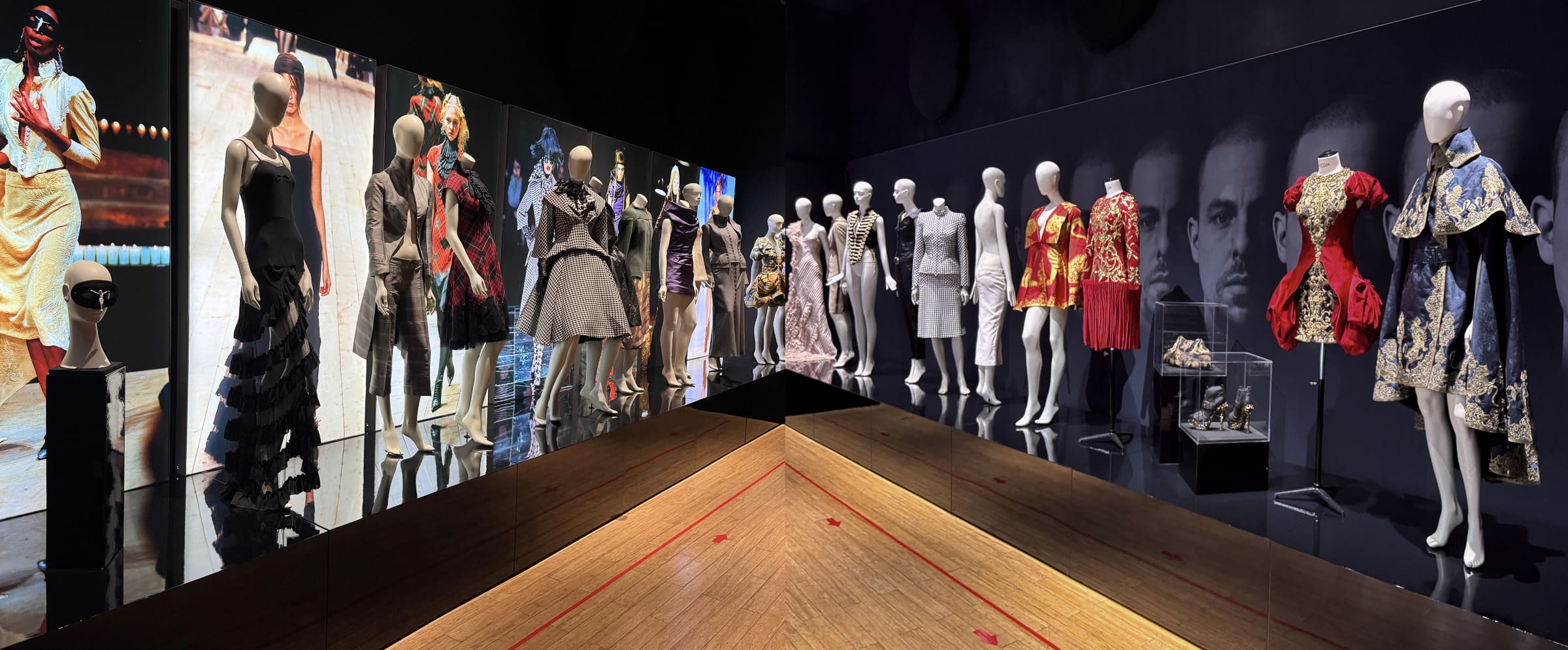
This was an exhibit about depth and an invitation to look past the first thing you see. It is this instinct and vision that elevated Lee Alexander McQueen above his peers then, and still today. And it is why his story matters. The ideas he pushed to their controversial limits were not only to shock, but to wake people up, to buy into something bigger than fashion. The Byronesque journey through some of his most infamous collections wasn’t chronological. Instead, from our interview with @McQueen_Vault’s John Matheson, it wandered through the angels and demons that led Lee Alexander McQueen to become one of the greatest creative minds of our generation. Out of our collective worst nightmares, he gave us clothes that, today, we can only dream of.
“I have no idea what McQueen might have created today, and I prefer to keep it that way. His work was so intrinsic to his identity and lived experiences that guesses and conjecture almost feel disrespectful. He worked in an era of experimentation and designed, in part, as a response to the cultural and political climate of his time, particularly from a British perspective. His themes and ideas made me want to research topics, understand context, and reconsider ideas of what a garment could be or mean. With an innate talent and passion for craft, his collections were as technically brilliant as their visual and emotional impact. When you look deeper, you will see that even though his ideas evolved and became more elevated, McQueen never lost his bite.”
― John Matheson, @McQueen_Vault.
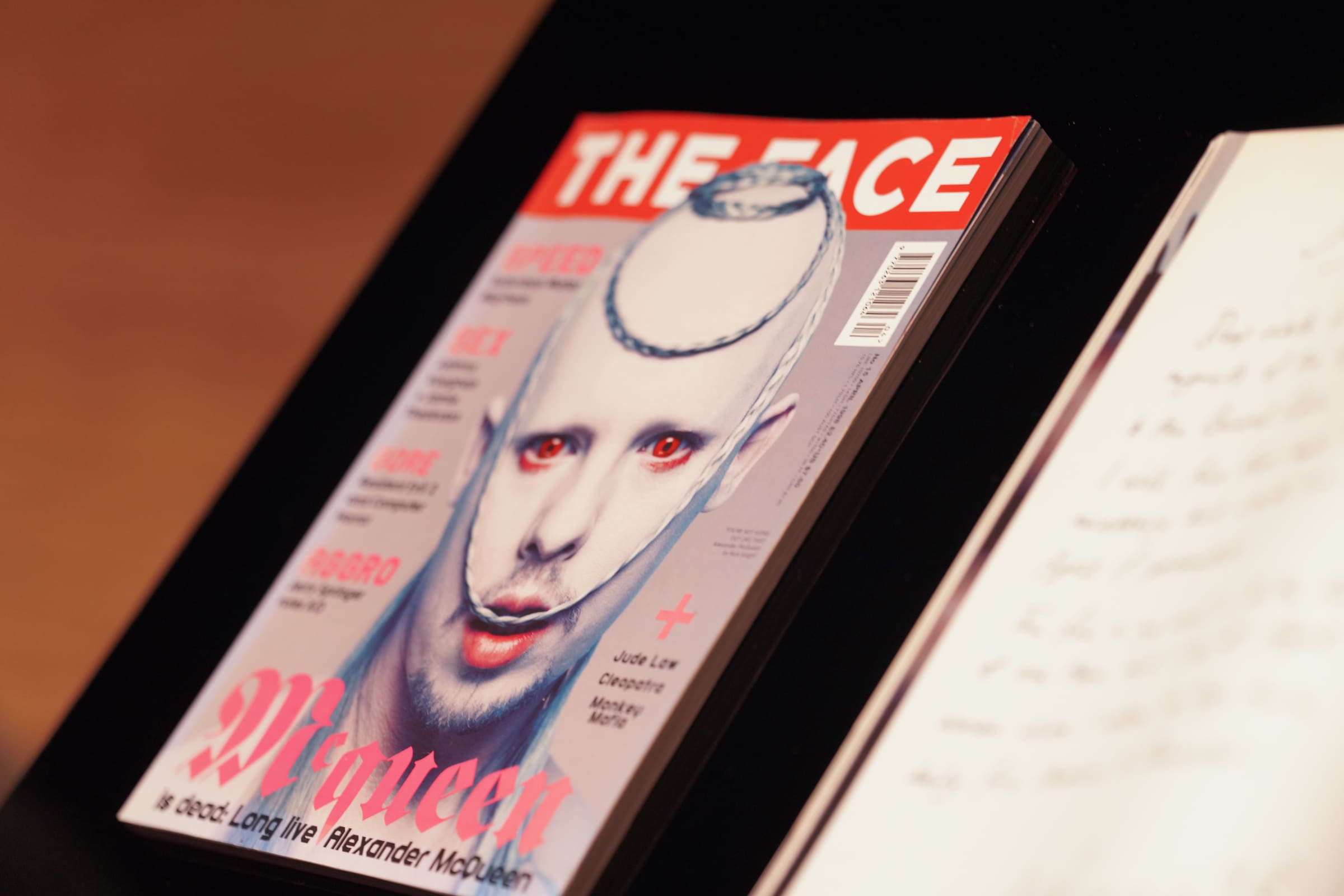
The Face Magazine, April 1998. Shot by Nick Knight. Part of a display of Lee McQueen editorials.
“Know ye not that there is here in this world a secret confraternity, which one might call the Company of Melancholiacs? That people there are who by natural constitution have been given a different nature and disposition than the others; that have a larger heart and a swifter blood, that wish and demand more, have stronger desires and a yearning which is wilder and more ardent than that of the common herd. They are fleet as children over whose birth good fairies have presided; their eyes are opened wider; their senses are more subtile in all their perceptions. The gladness and joy of life, they drink with the roots of their heart, the while the others merely grasp them with coarse hands.”
― Jens Peter Jacobsen, 1882.
Told in two parts, the exhibit began with four acts unfolding like a dramatic film noir. Act I, titled Misunderstood, opened with an original Access All Areas pass from The Highland Rape, AW 1995. This opening invitation into Lee’s world was followed by acts II-IV: Melancholy, Malice, and Mentor which featured items from Dante, AW 1996, No 13, SS 1999, The Widows of Culloden, AW 2006, The Horn of Plenty!, AW 2009, It’s a Jungle Out There, AW 1997, Joan, AW 1998, In Memory of Elizabeth How(e), Salem 1692, AW 2007, and Plato’s Atlantis, SS 2010, set against a backdrop of backlit floor to ceiling runway images.
Part two traced McQueen’s creative evolution through three interwoven narratives: Intermission, Illusion, and Immortal, featuring items from Voss, SS 2001, Supercalifragilisticexpialidocious, AW 2002, The Girl Who Lived in the Tree, AW 2008, Scanners, AW 2003, and The Birds, SS 1995, a rare look at McQueen’s infamous hair label. The exhibit ended with a group of dresses from Angels & Demons, AW 2010 and a large-scale portrait of Lee as a poignant homage to his cultural and creative legacy.
Misunderstood
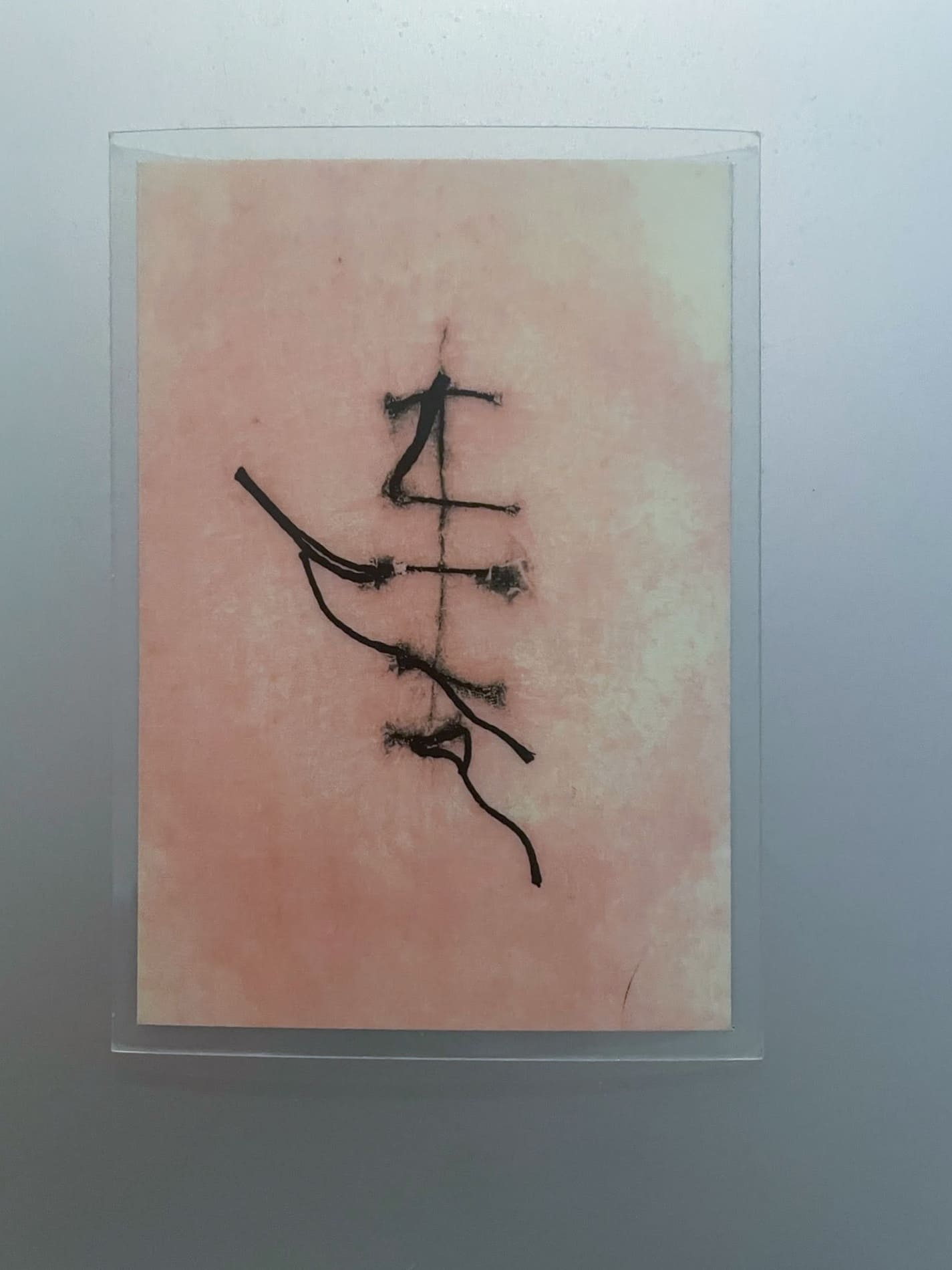
Highland Rape Access All Areas Pass, Autumn / Winter 1995.
BYRONESQUE: This is the Alexander McQueen show that established that fashion could have social and political meaning, as well as cultural significance. It was also perhaps McQueen’s most misunderstood. Exposing injustices and butt cracks, he intentionally polarized people, forcing them to confront uncomfortable content. This is the show that challenged, and forever changed, what a garment could be.
McQUEEN VAULT: I remember seeing footage of a British politician being interviewed on the evening news about how designers had no right to be talking about the brutalization of women. That fashion should not dare be anything other than pretty clothes. The show was provocative on every level, and completely misunderstood, except by those who took the time to look at it a bit deeper. Just starting with the invitation, where you’re forced to look at a sutured wound that makes you uncomfortable, he challenged us to question “why”? Why does it make me uncomfortable? What are we getting ready to see that’s causing me to react in this way?
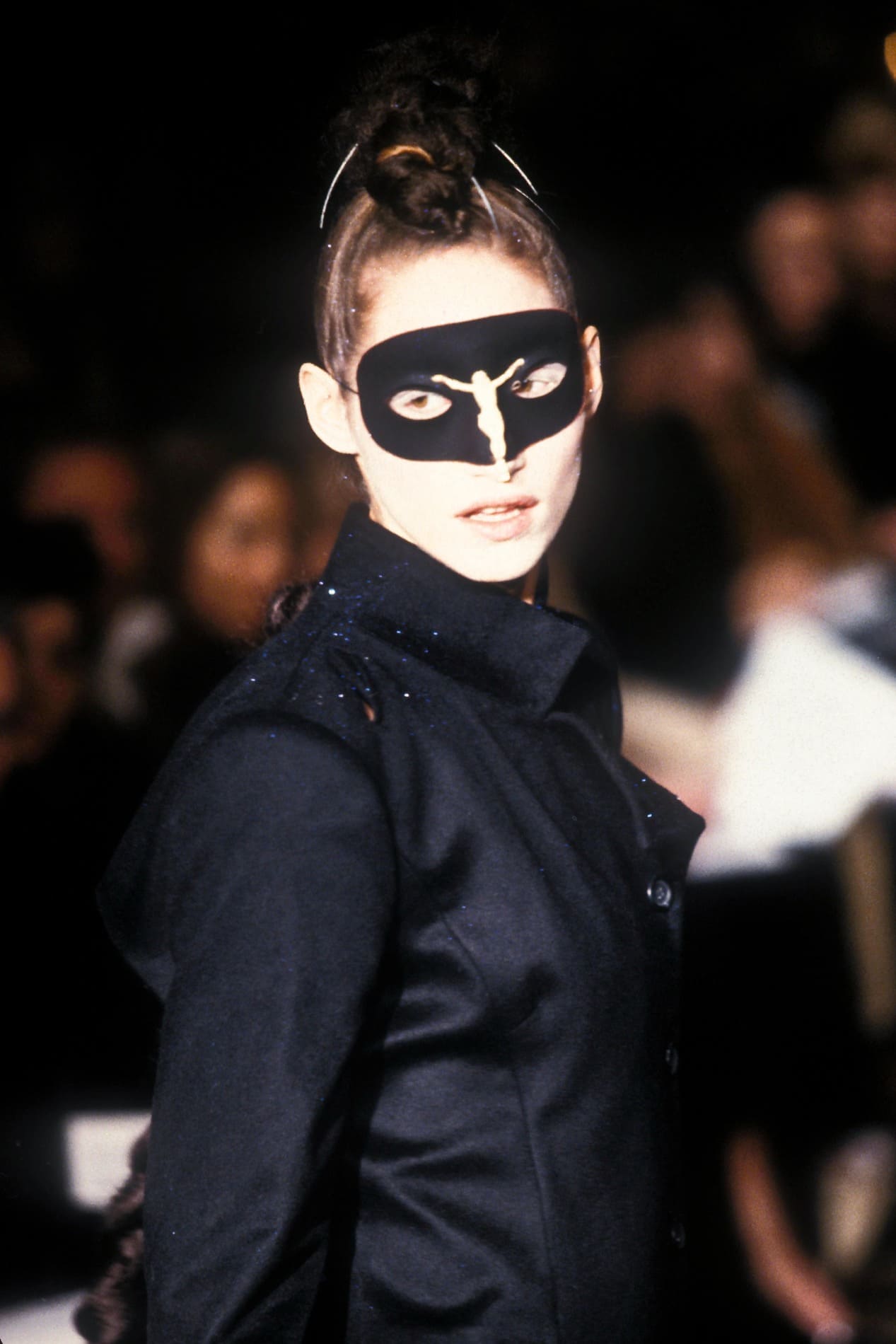
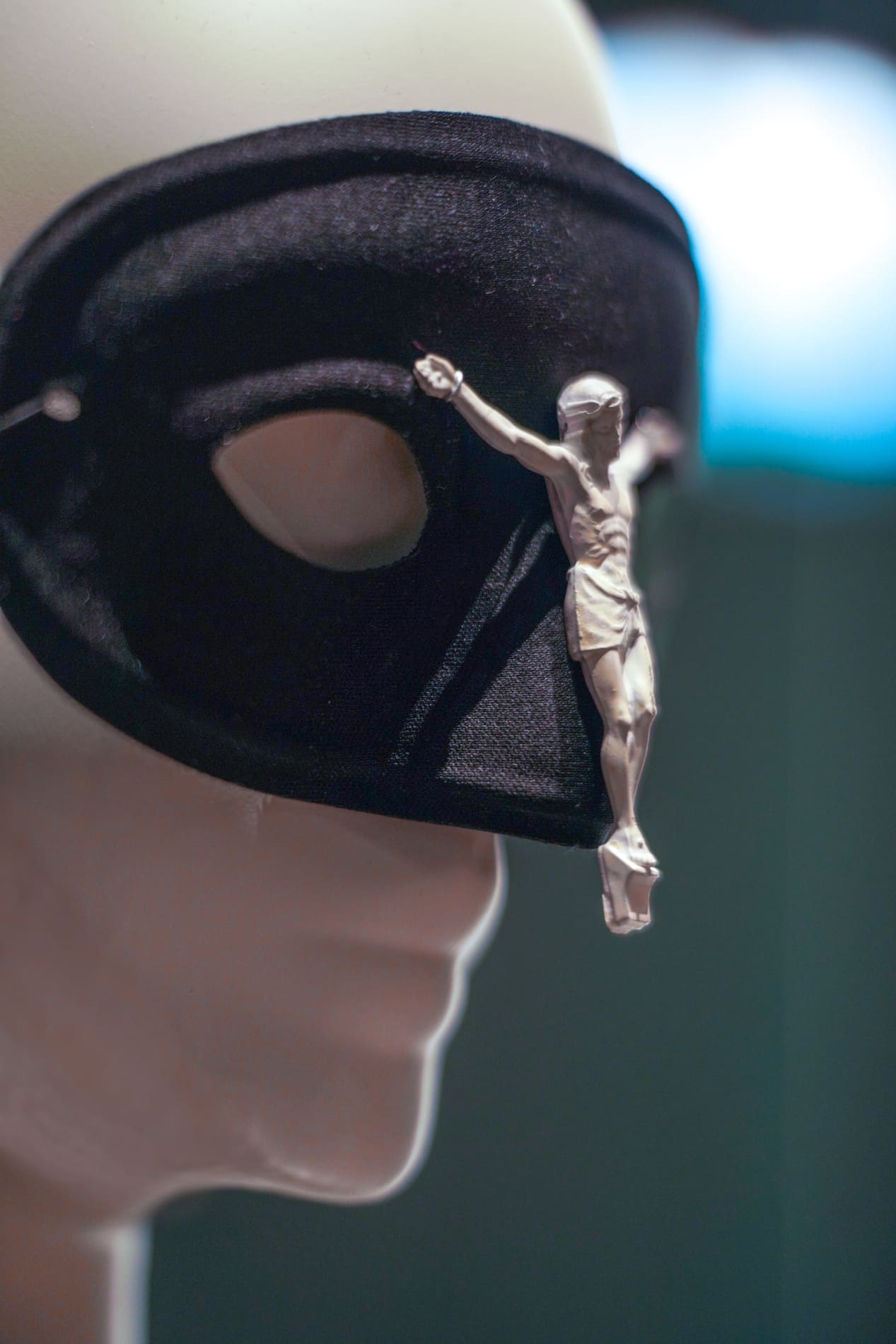
Dante Crucifix Mask, Autumn / Winter 1996.
BYRONESQUE: The incomparable talent of McQueen was his constant drive to push creativity to its very limit. Not one creative opportunity was left out, and the liminal details within Dante have become fashion history pop-culture.
McQUEEN VAULT: Where Highland Rape got everyone’s attention, Dante spread McQueen’s vision around the world. This was a commentary on war and religion and how they could be transformed into a silhouette, a print, and even a soundtrack. He referenced many creative practices— 15th Century Flemish paintings, literature, war photography—absorbing them and bringing them into his universe. The crucifix masks created by Simon Costin, for example, were a direct reference to the work of artist Joel Peter Witkin, whose provocative work often reflected religious tableaus. These visuals made you question yourself, your beliefs, and what the artist might be saying. That’s so rare now. People understood that beyond his openly unapologetic opinions, he had incredible ideas and the innovation to back it up. First shown in London, New York and then Tokyo, Dante was the collection that made McQueen international.
Melancholy
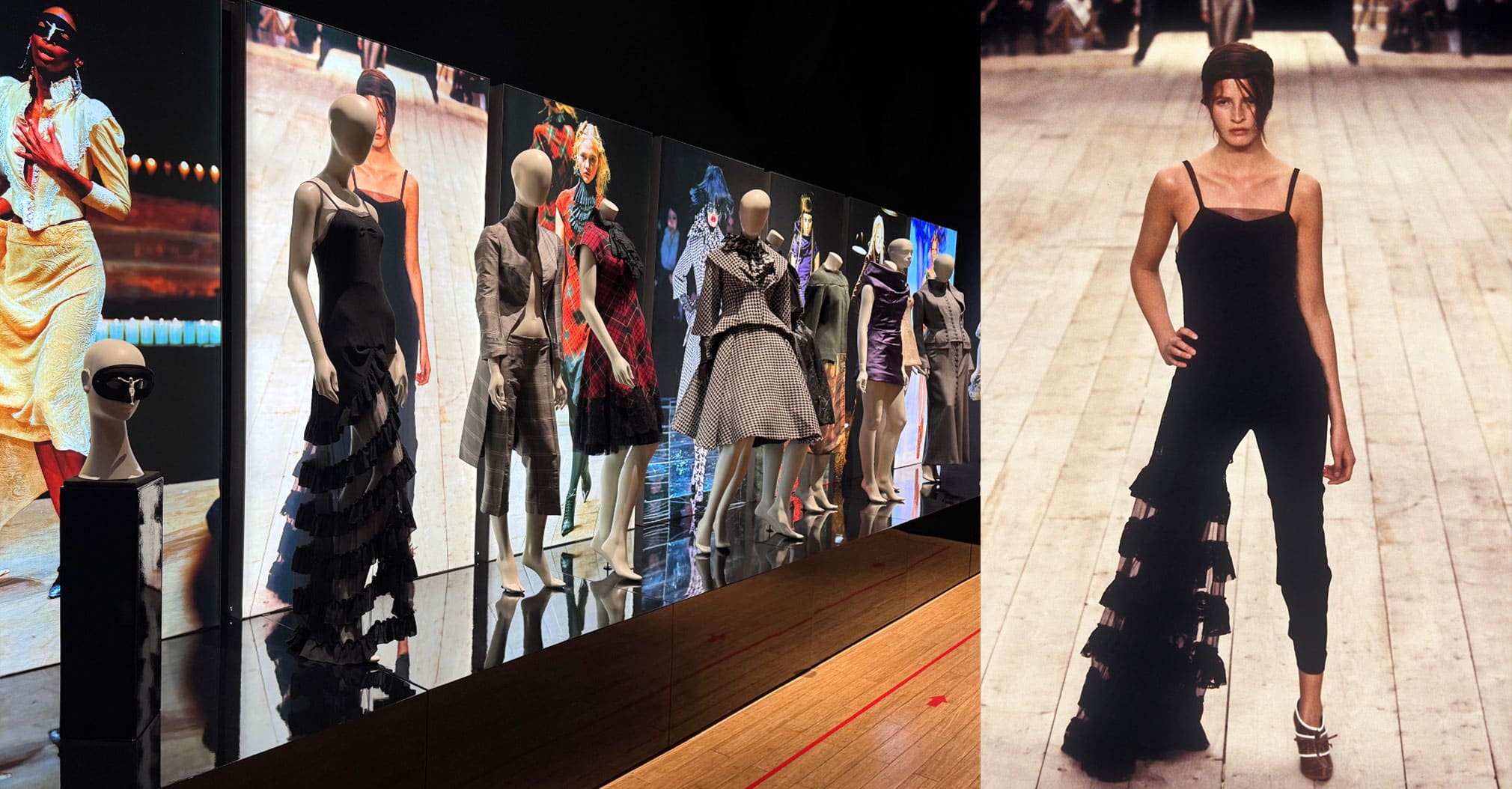
No. 13 Dress and Suit, Spring / Summer 1999.
BYRONESQUE: Nihilism was McQueen’s common thread, and he used it to create new forms and structures. He saw beauty, hope and strength in melancholy where others could not begin to imagine. Instead of creating around sterile female stereotypes, he talked often about freeing women from disempowerment; he stated that he wanted people to fear the women he dressed. NO.13, Widows of Culloden and The Horn of Plenty! show McQueen as a masterful and cultural truth-teller, unafraid to dress up the darkness of disability, mourning and excess.
McQUEEN VAULT: When the subject of female empowerment comes up, I always think about how the people surrounding him were mostly women. Katy England was one of the biggest influencing voices in the vision of McQueen. The majority of his studio team were women. He was in a chamber of reflection with those women, all very strong, skilled, and talented in their own rights.
If you start with this empowered femininity being the context in which he produced collections, as you move into No. 13 you see this incredibly thoughtful approach of craft applied to disability. As a child of a parent in a wheelchair, I had never seen the machinations of disability shown in this light. The hand-carved elm legs and sculpted leather forms for Paralympian Amy Mullins show her as powerful, not delicate. This beauty, empowerment, and female strength is celebrated in a way that is complimentary, not forced novelty. In this collection McQueen used silhouette-altering cutaways to evoke and exaggerate movement. This kinetic approach to proportion and form became one of his many trademarks.
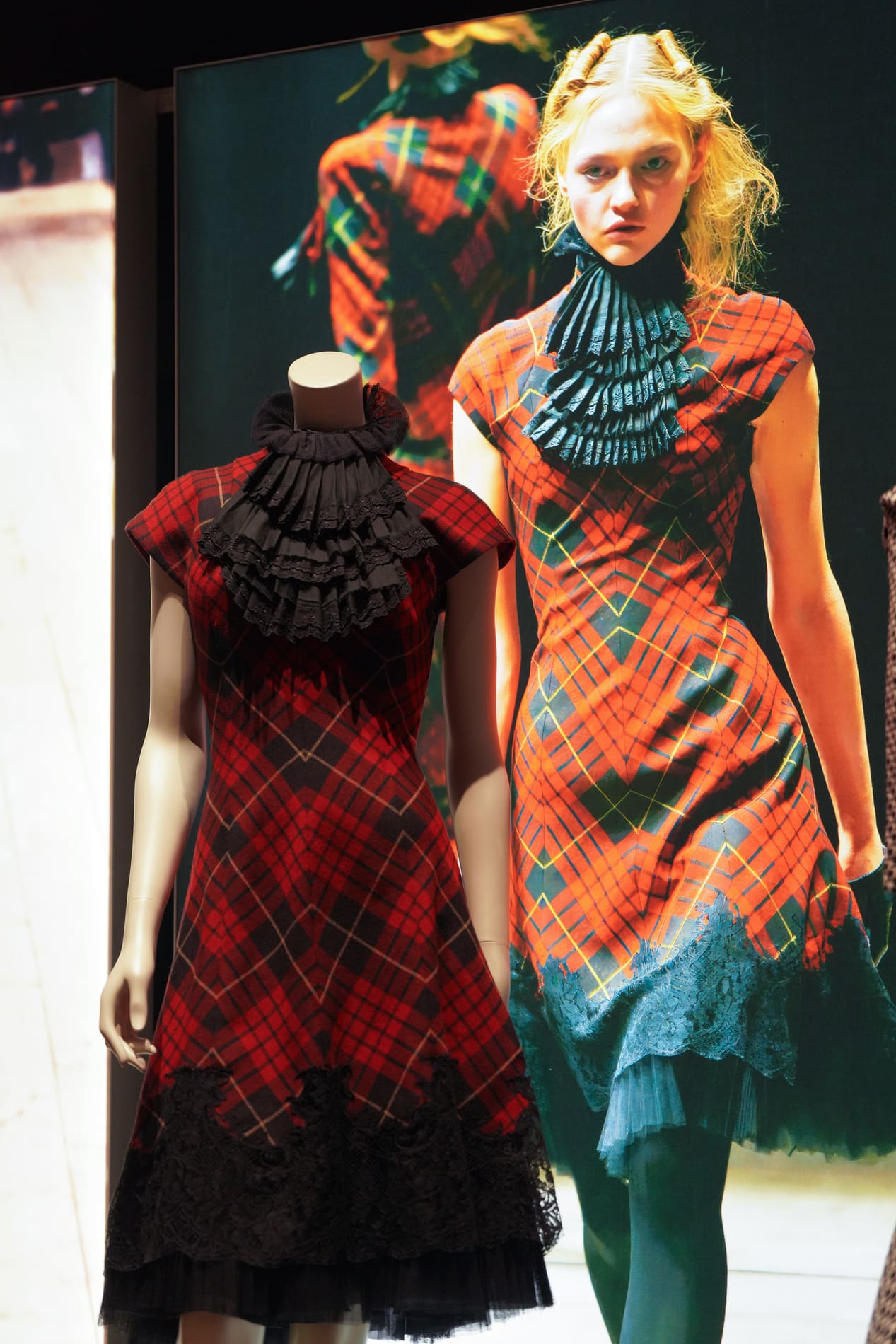
The Widows of Culloden, Tartan Dress, AW 2006.
McQUEEN VAULT: With Widows of Culloden, it is crucial to follow the thread back to The Highland Rape collection, because not only is the collection also based on McQueen’s own culture and heritage, him being of Scottish descent, but it also recalls the theme of ethnic cleansing. He sought justice through his ability to take something so culturally catastrophic and make it astonishingly beautiful. The tartan here was purposefully a deeper tone than the typical Clan MacQueen tartan, removing novelty, creating a weathered authenticity. Even the dress’s bustle, which started as a typically restrictive Victorian detail, shifted to a more modern and lighter silhouette
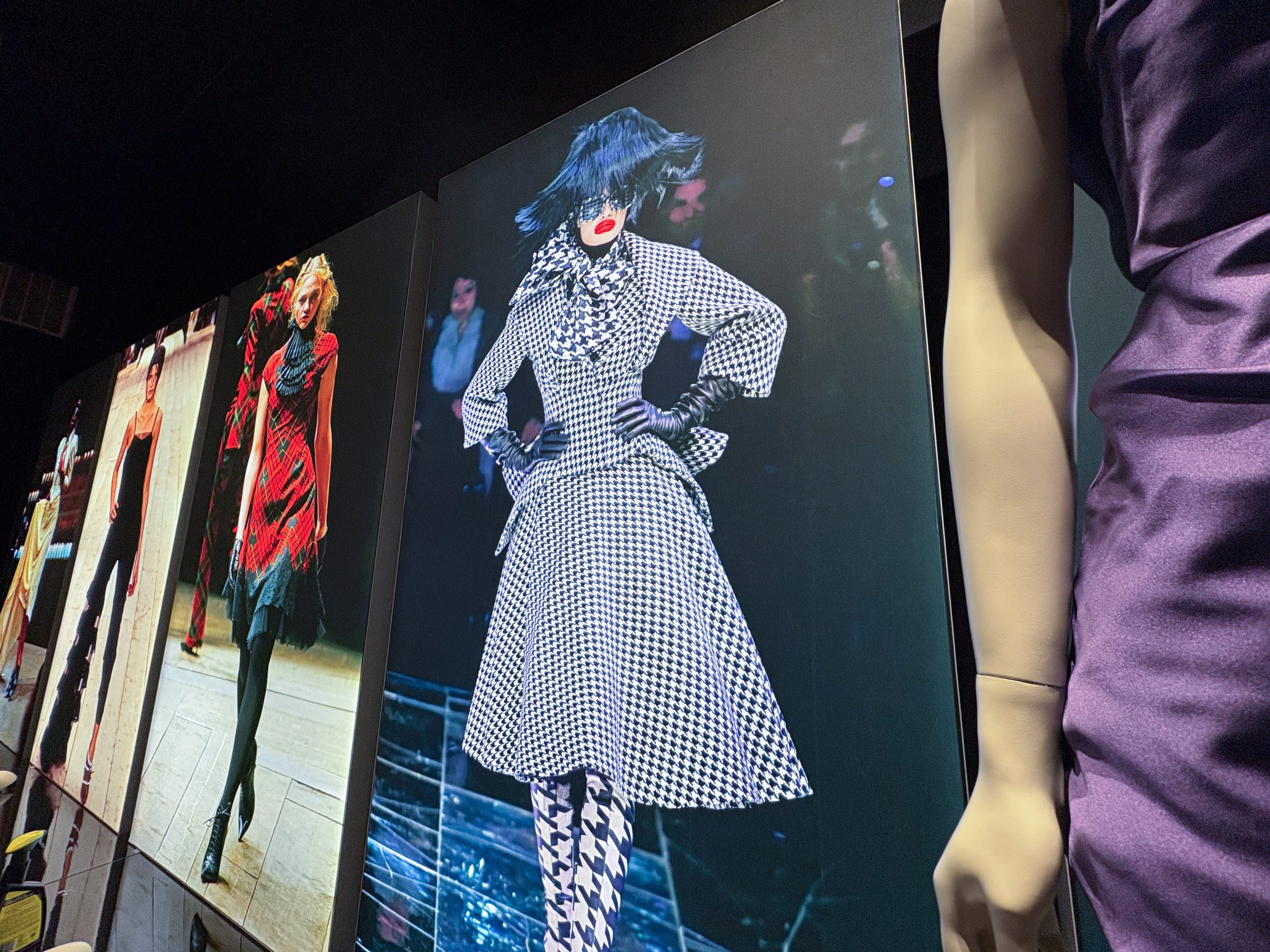
The Horn Of Plenty! Houndstooth Suit, Autumn / Winter 2009.
McQUEEN VAULT: The Horn of Plenty! revealed his love/hate relationship with the business of fashion. He was completely aware of the dragon he was riding, and he unapologetically called people out when he saw fit. This was apparent in his It’s A Jungle Out There collection, and later in Plato’s Atlantis, which we can now see as an evolution of his commentary on environmental issues.
For The Horn Of Plenty! he challenged Philip Treacy to make hats out of mundane objects. Lampshades or a hub cap from a car were mutated and melted into something quite deranged, but the finished pieces reflected the grandeur of shapes from an haute couture atelier. Details in storied prints like checks and houndstooth, warped and distorted to disorient the eye; in fabrics that mimicked trash bags, made light and reflective and draped into grand balloon poufs and bows. When I think of The Horn of Plenty! I always think of his sense of humor and his absolute piss-take of the industry.
Malice
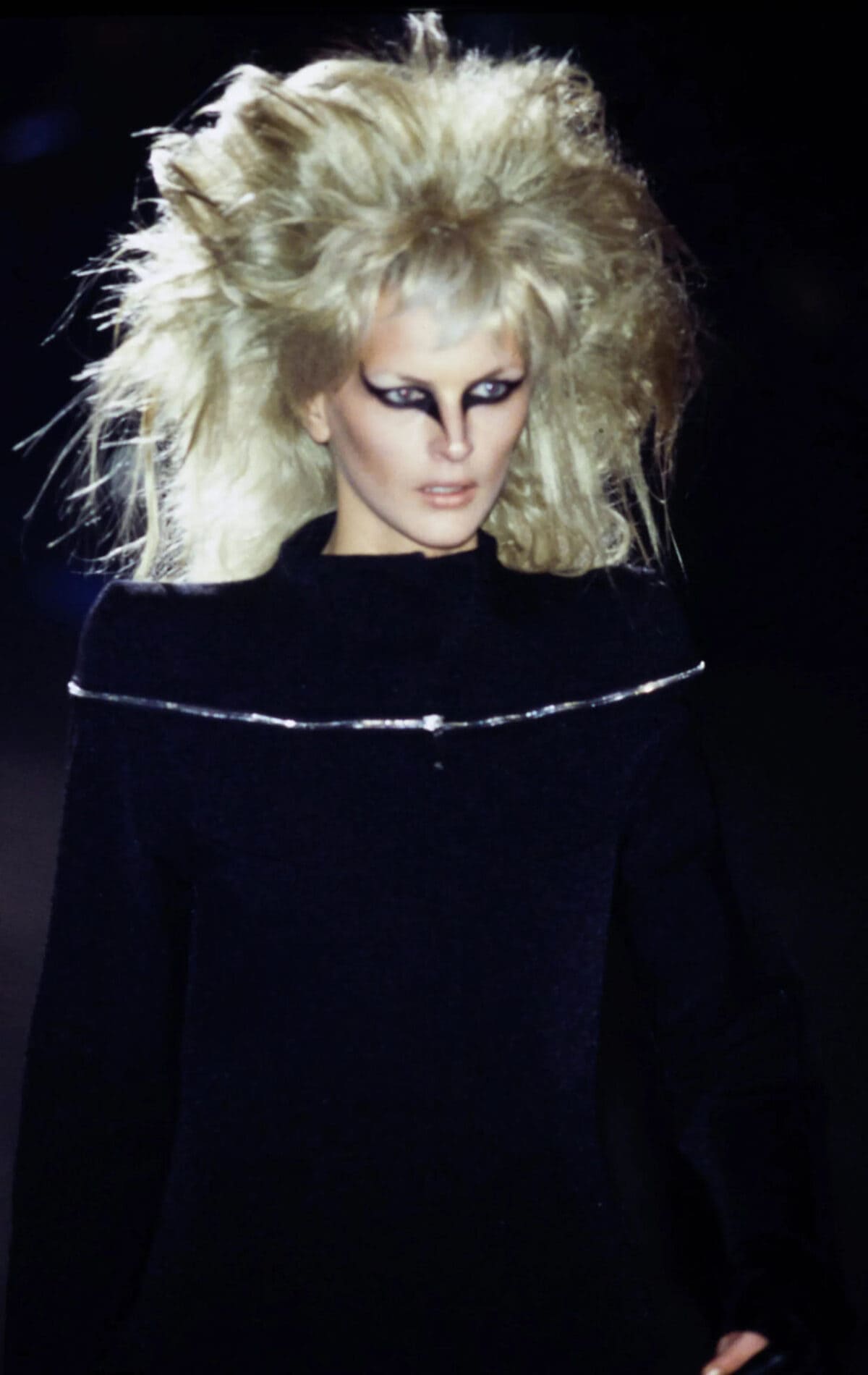
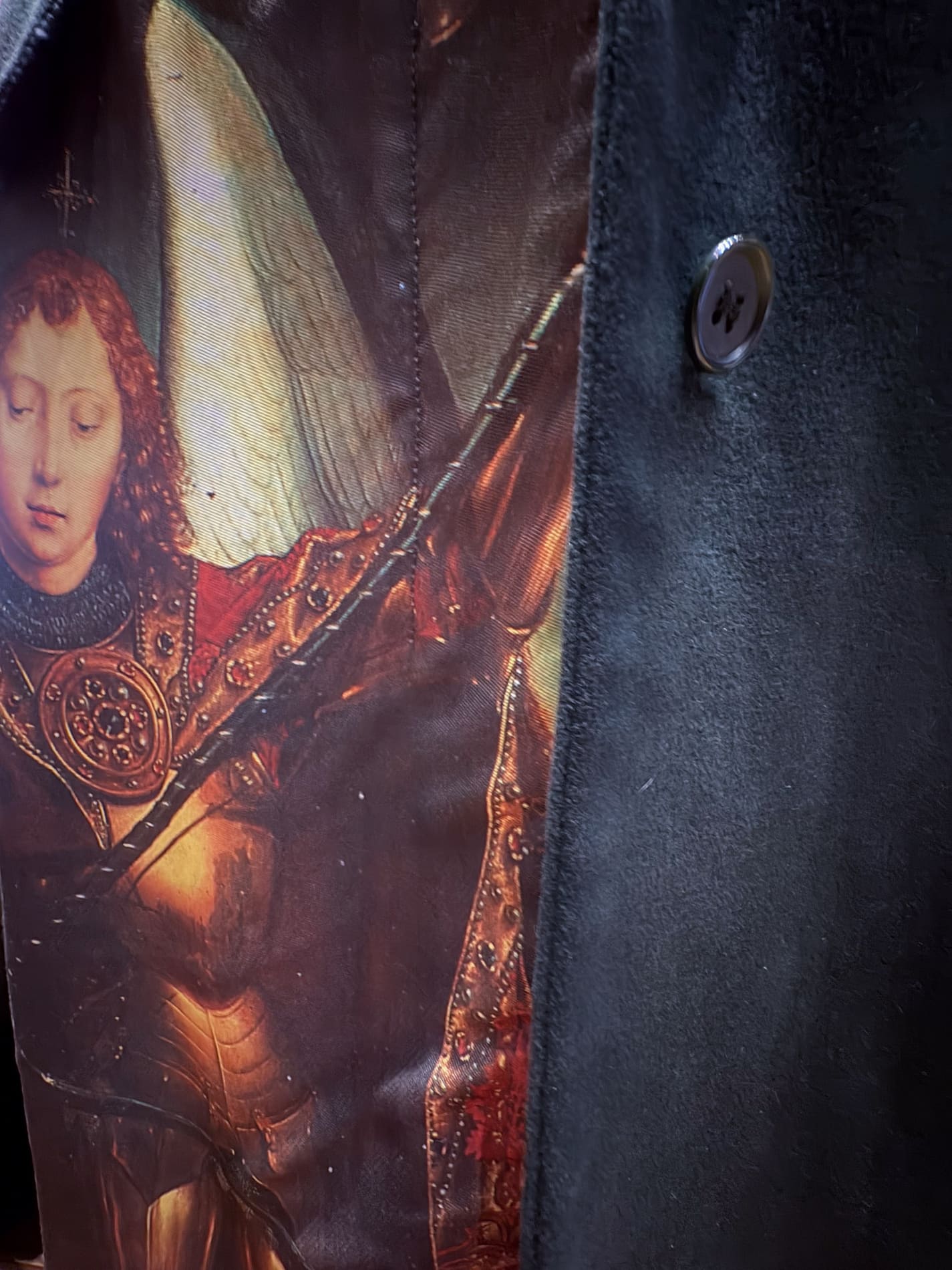
It’s A Jungle Out There Coat, Autumn / Winter 1997.
BYRONESQUE: McQueen was one of the first designers to use his creativity to expose injustice. It’s A Jungle Out There was a reaction to bad reviews for his debut collection at Givenchy. The witch-hunt of In Memory Of Elizabeth Howe, Salem, 1692 and his AW 1998 collection Joan, now one of his most collectable, were famously about the injustice of female persecution. Through the lens of his own experiences, these collections were a middle finger to the fashion system and a subversion of Savile Row.
McQUEEN VAULT: The It’s A Jungle Out There collection felt personal. It felt like it was him against the world as he entered the hallowed halls of haute couture in 1996. Born into a working-class family, McQueen came from outside of the system, perceived as someone with no place in that haughty realm. Not only was he not welcome, but he was also mocked for his physical appearance, his dialect, and the way he spoke. The fashion press had it in for him because it made easy headlines to point out McQueen’s differences, when they were accustomed to the grandeur of Karl Lagerfeld and the suave Yves St Laurent.
With the French already offended and McQueen on the offensive, it’s probably no coincidence that his next collection was inspired by the Thompson’s gazelle, a main prey species on the African veldt, constantly being stalked as food. The visceral result is these incredible silhouettes, primal fabrics, and jutting shoulders. This coat, with its domed shoulders, features a print of the archangel St Michael judging souls upon entry to Heaven, reflecting justice versus damnation, which no doubt represented his feelings at the time.
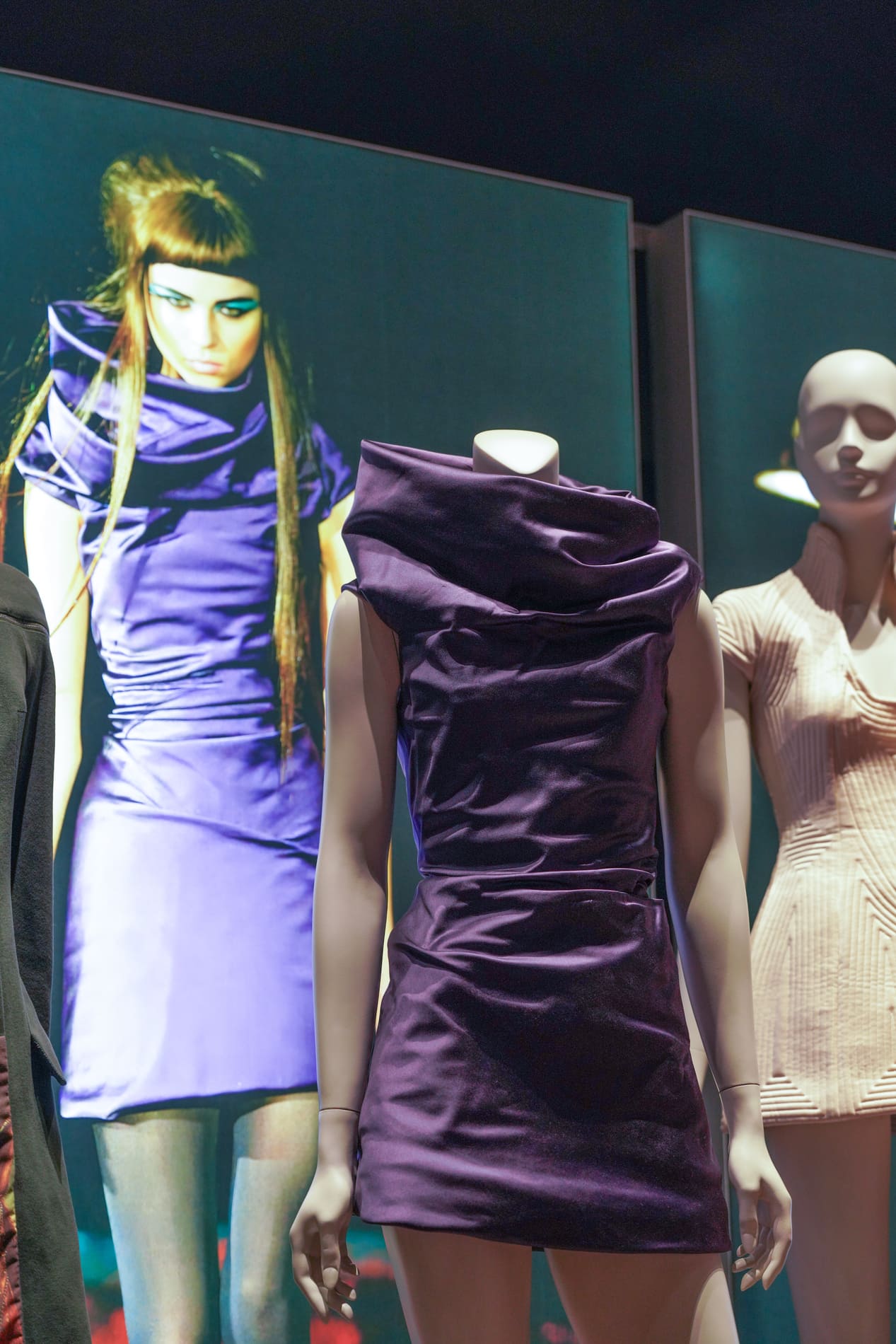
In Memory Of Elizabeth How(E), Salem, 1692 Dress, Autumn / Winter 2007
McQUEEN VAULT: This bone-colored dress, from the In Memory Of Elizabeth Howe, 1692 collection, has lines which perhaps mimic ley lines, embedding ancient spirituality into the garment. This show may have made some viewers clutch their pearls. The show itself featured a red pentagram on the runway, and symbols and totemic objects of Elizabeth Howe appeared throughout the collection, like stars, moons, eggs, flames, and incantations. Formed face plates like ornamental funeral masks and sculpted sarcophagi hark back to the Egyptian and pagan rituals he tapped for inspiration and illustrated in the video projection of the show. And while seemingly dark, this collection again taps into innate feminine power and the spirituality of outliers, seeing death not as an end but redemptive—the ascension to the afterlife, even after persecution and execution.
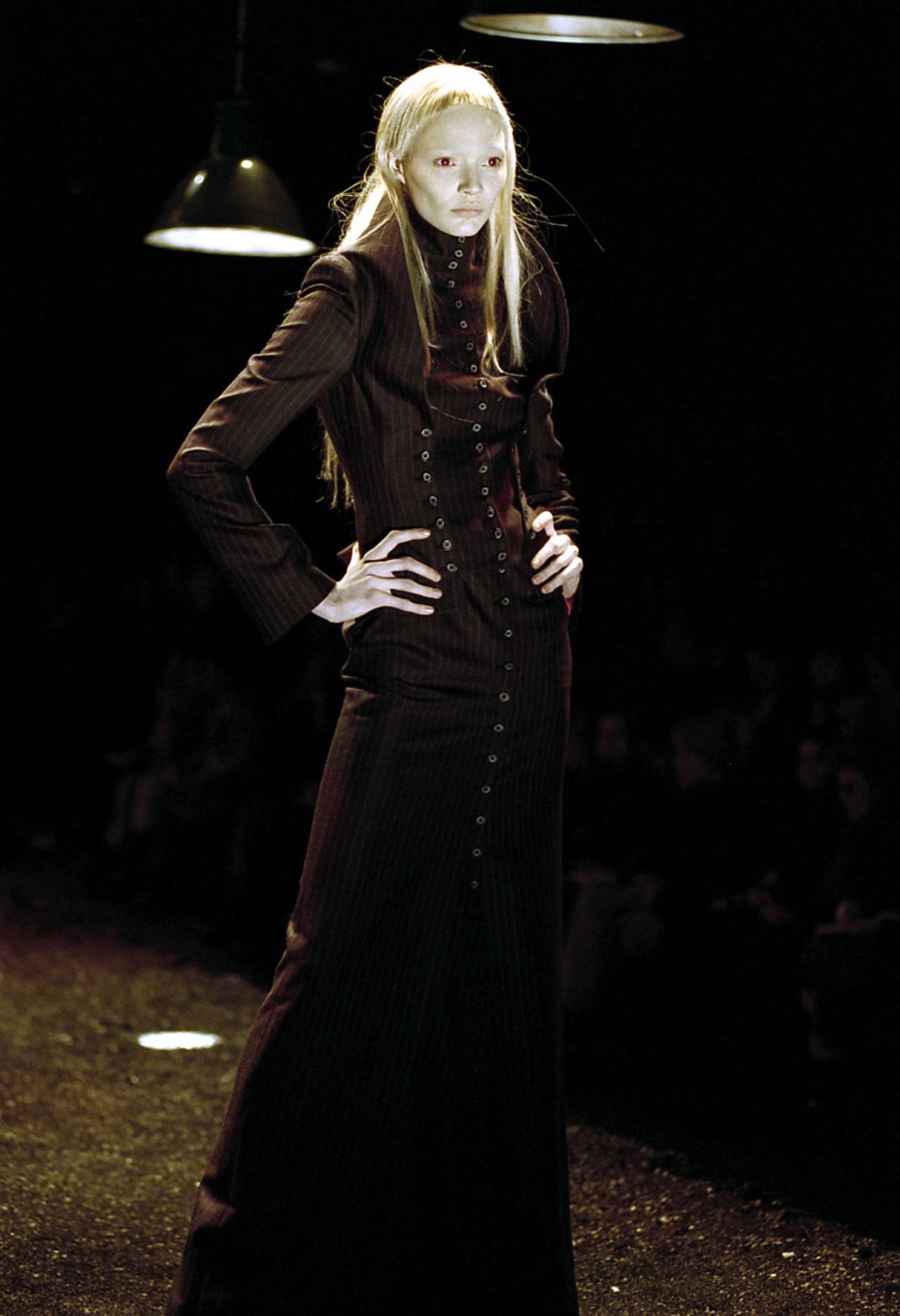
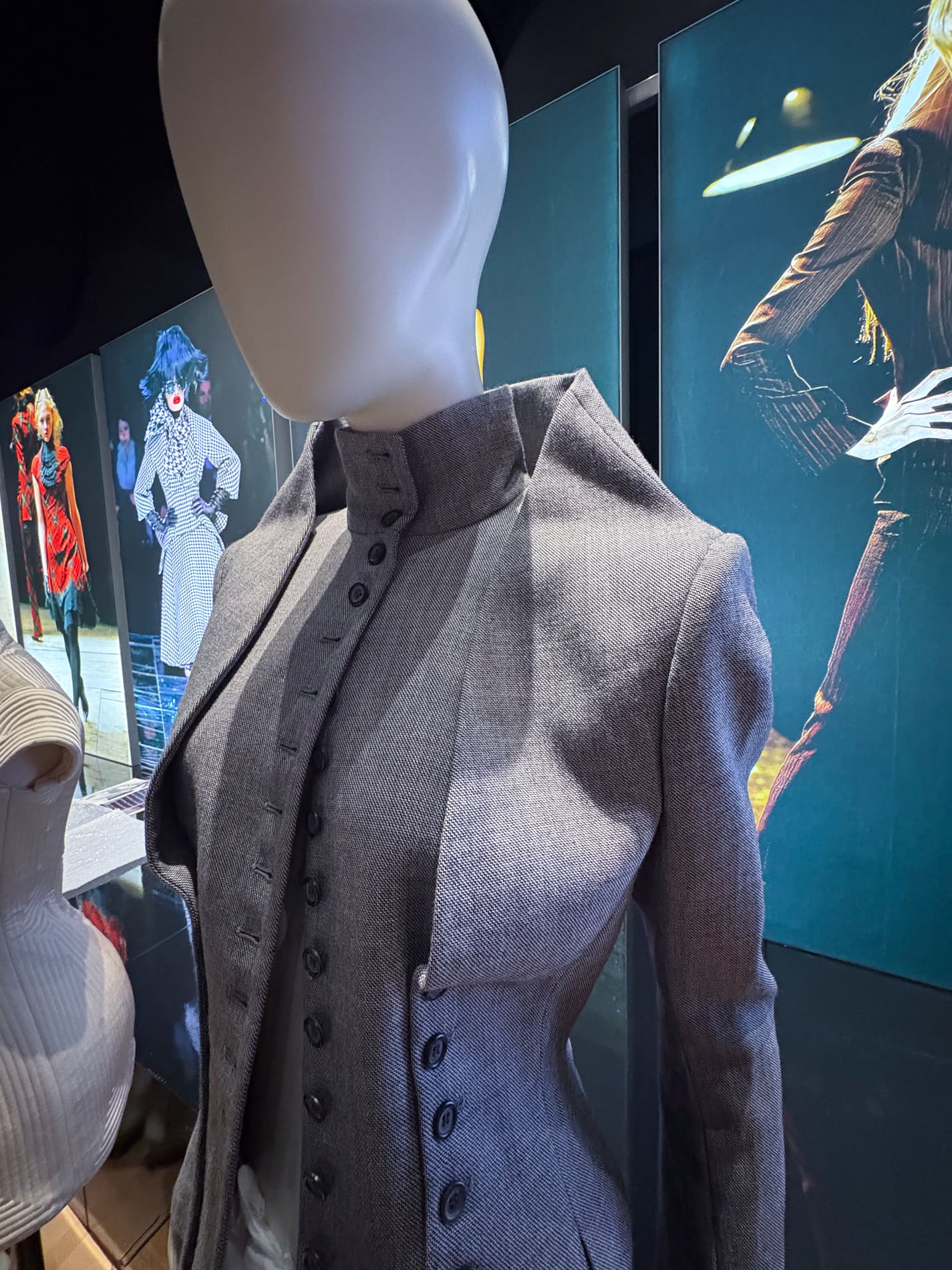
Joan Suit, Autumn / Winter 1998.
McQUEEN VAULT: In 1998 McQueen had been at Givenchy for two years, and you can see that this collection for his own house was on a different level. Collections were more luxurious, without losing their bite or message. Joan explored an ecclesiastical silhouette that was long, lean, with high collars and long sleeves, like a clerical presence—only to symbolically “burn” it at the show’s dramatic finale, which featured the model Svetlana in a red beaded dress that covered her face, posing defiantly in a circle of fire. Perhaps in opposition to the church and organized religion.
Mentor
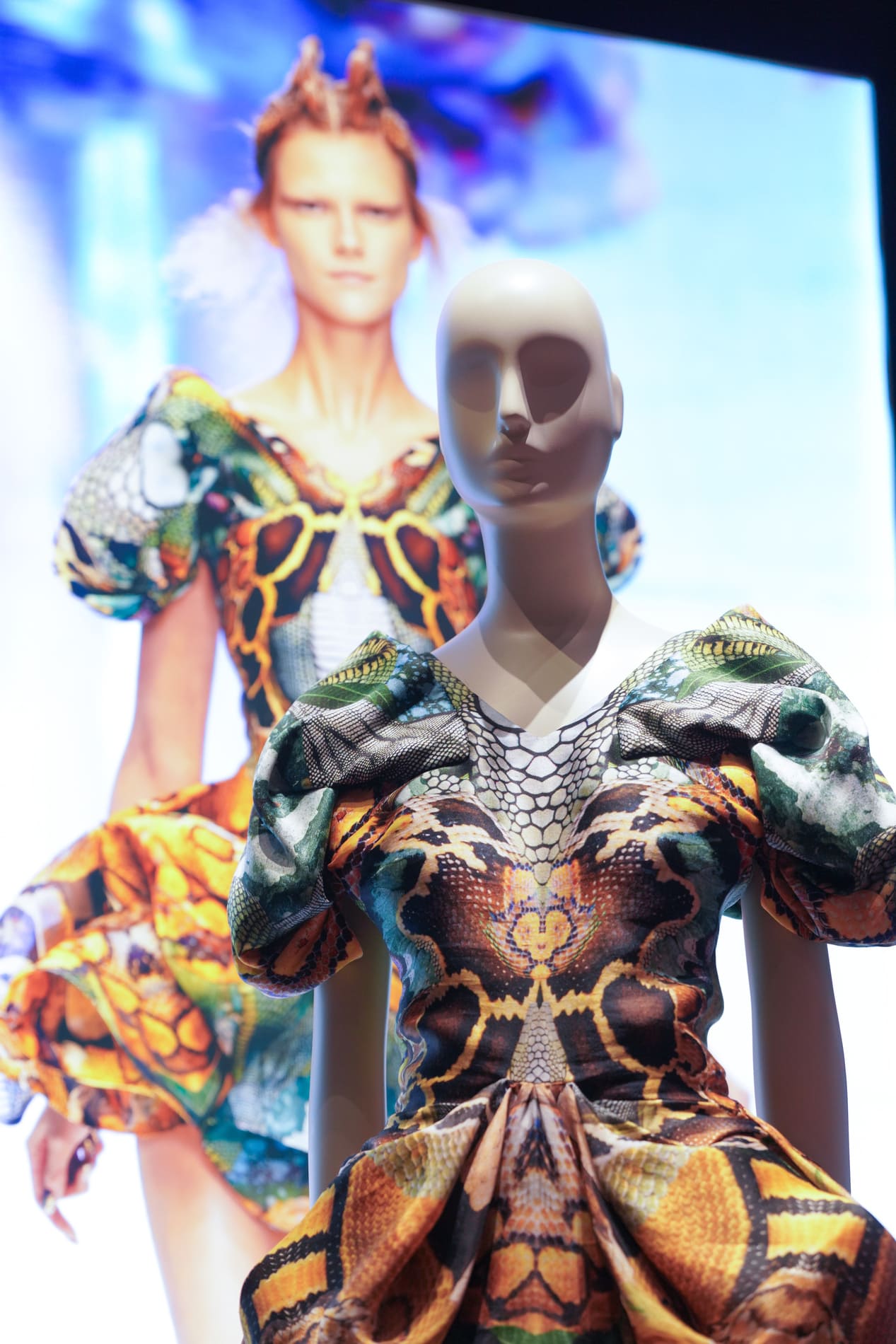
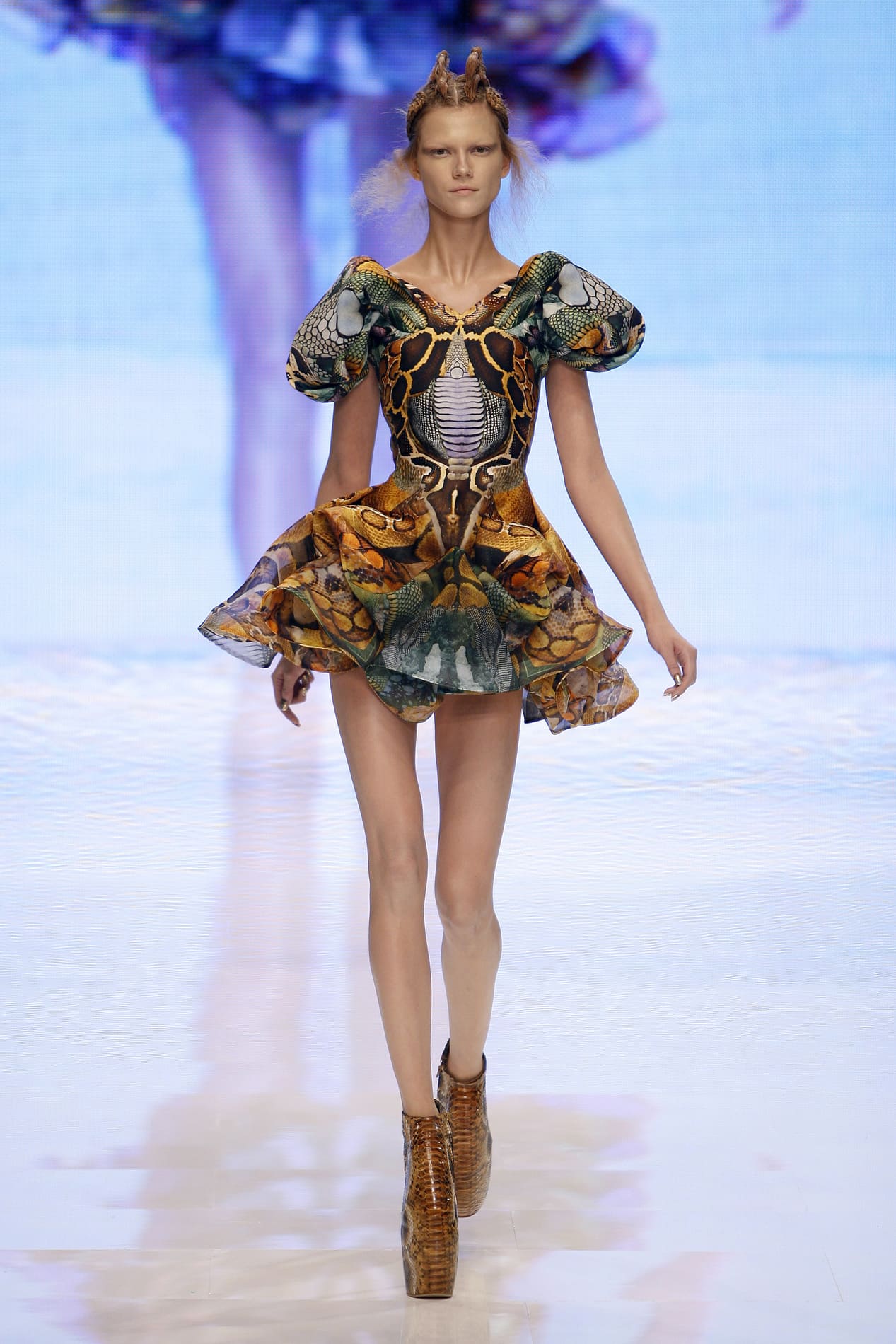
Plato’s Atlantis Moth Dress, Spring / Summer 2010.
BYRONESQUE: Plato’s Atlantis was a message from the depths of his imagination. What if climate change causes the oceans to rise up, what would human life evolve into? It’s another example of how he found creativity within catastrophic scenarios and gave them contemporary relevance. While it was a commentary on human evolution it was, arguably, also the peak of Lee’s evolution as a designer — a collection that embodies so much of what he gave and taught us up to this point in his life.
McQUEEN VAULT: The collection was born out of the idea of human evolution, but it also pushed the evolution of clothing. He experimented with silhouettes and print and fabric manipulation—a print might start as a jacquard and disintegrate into the lightest of silk chiffon with the same print intact. An entire garment started with the print first, like a map for design, and the construction then followed the print. He was reimagining and reengineering how garments worked on the body. The pieces from this collection had at their core patterns, colors, and forms drawn from nature. He balanced diametrically opposed ideas, fusing technology and construction with the skin patterns of a reptile or a snake, or the tentacles of a jellyfish. It was astonishing that he was able to create order and beauty out of those contradictory elements.
Intermission
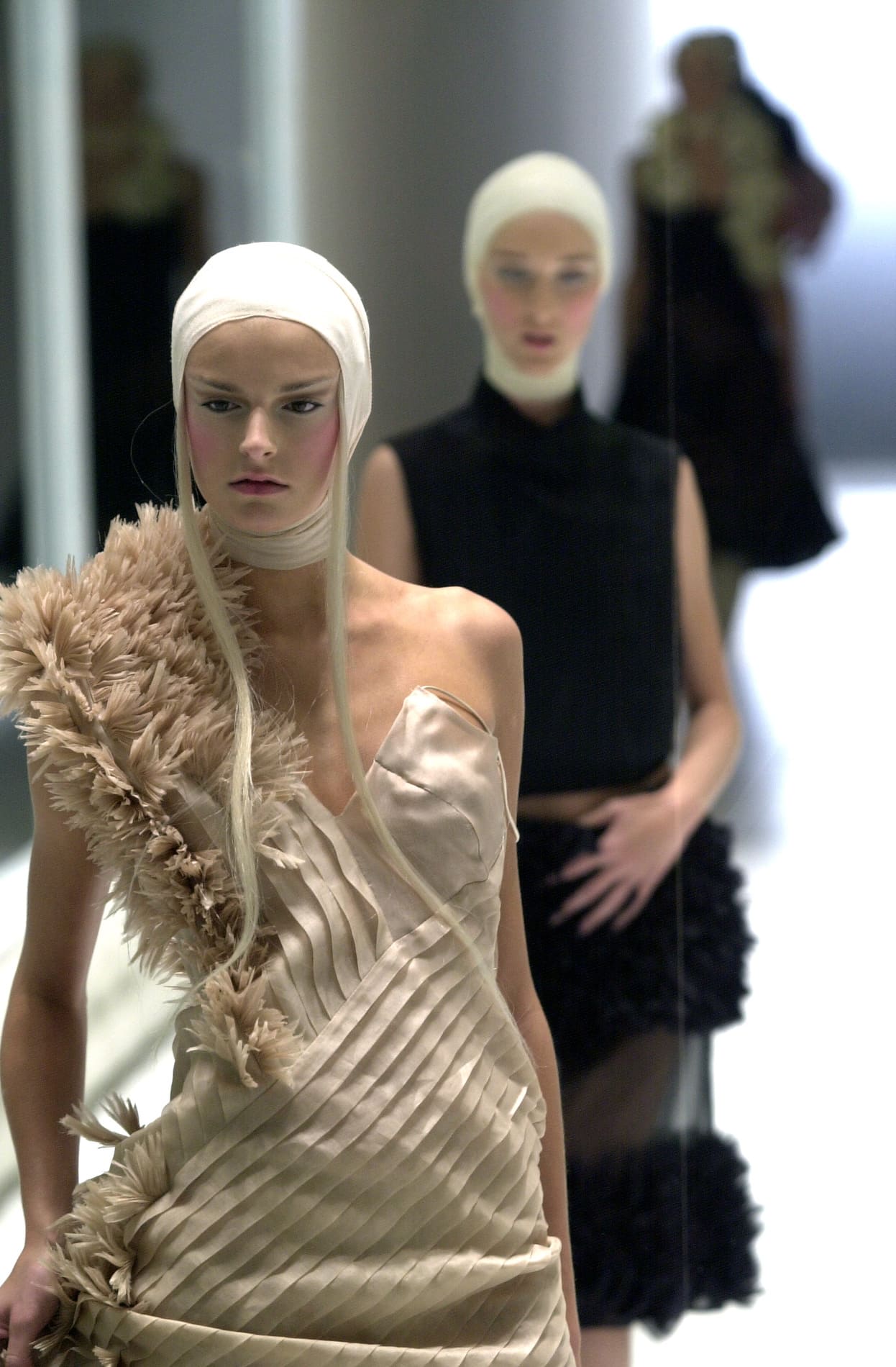
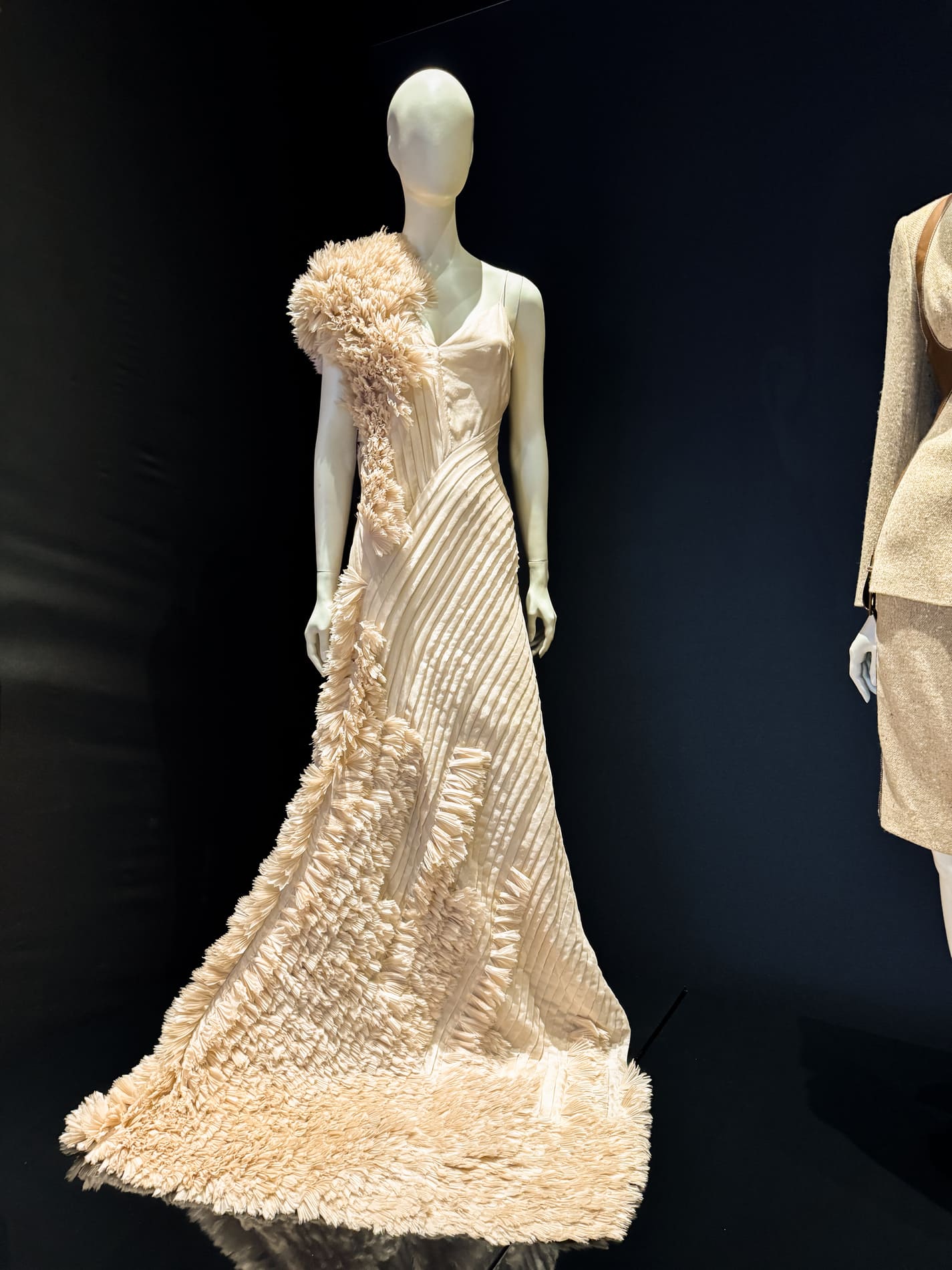
Voss Gown, Spring / Summer 2001.
BYRONESQUE: McQueen came out of the darkness with the whimsical, fairytale respite of the Supercalifragilisticexpialidocious and Girl in the Tree collections after the sartorial asylum of Voss. Two very different kinds of fantasy. Big narratives for the audience to empathize with or look away from—one showing the perverse horrors of reality, the others showing McQueen’s playful side.
McQUEEN VAULT: Voss is unbelievably layered, from the beginning to the Joel Peter Witkin finale, where you’re confronted with, yet another unusual idea of what beauty meant to McQueen. The collection challenged perceptions of “beauty,” and also challenged the audience’s engagement with the show itself. Actually, this deconstructed gown looks like feathers, but it’s shredded organza applied in plumage-like strips. Even though real feathers were abundant in the show, as were other natural materials like wood and mollusk shells, illusions like these were ever-present in the world of McQueen, where you were transported with the narrative but also invited to look beyond the clothes and their meaning.
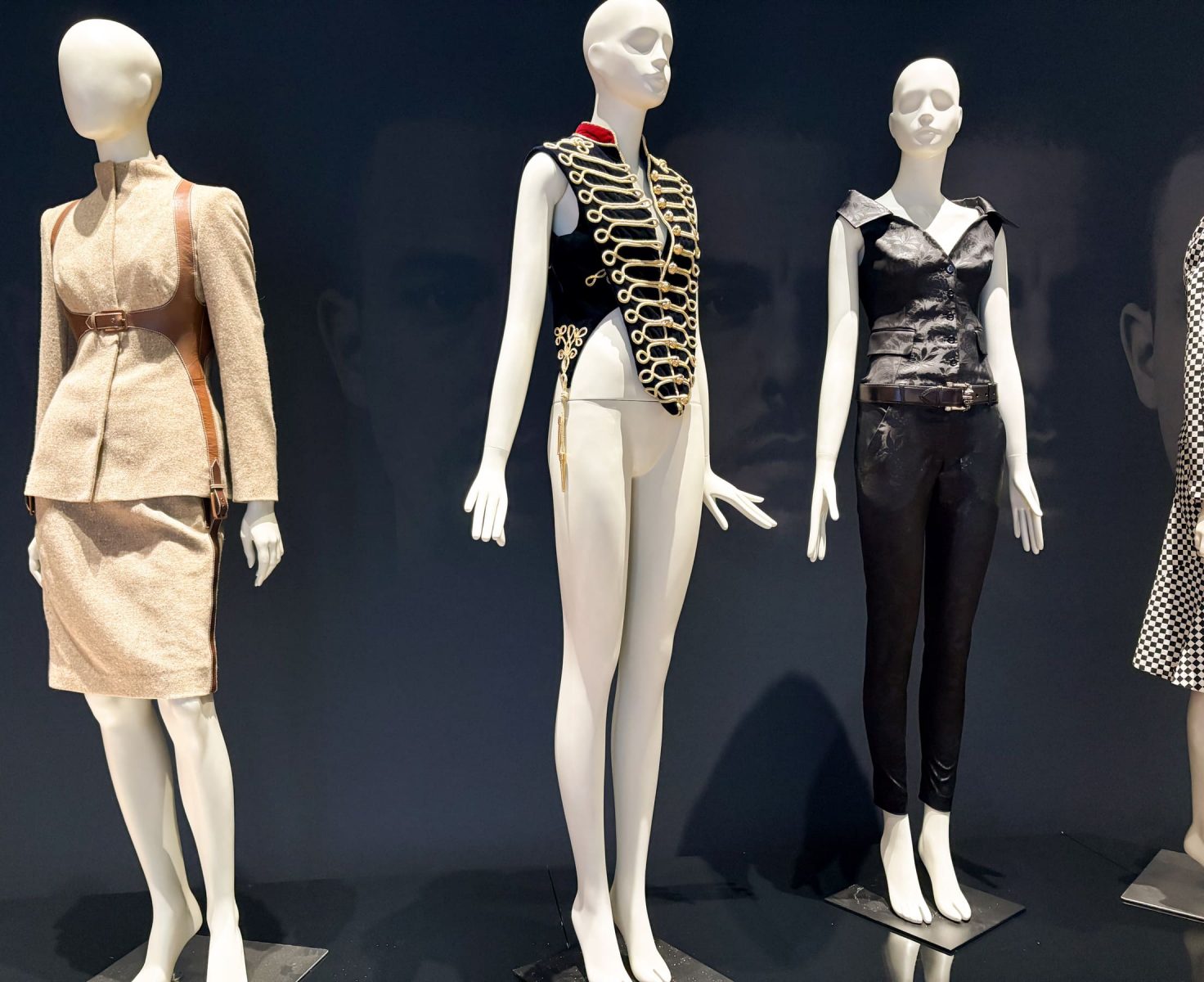
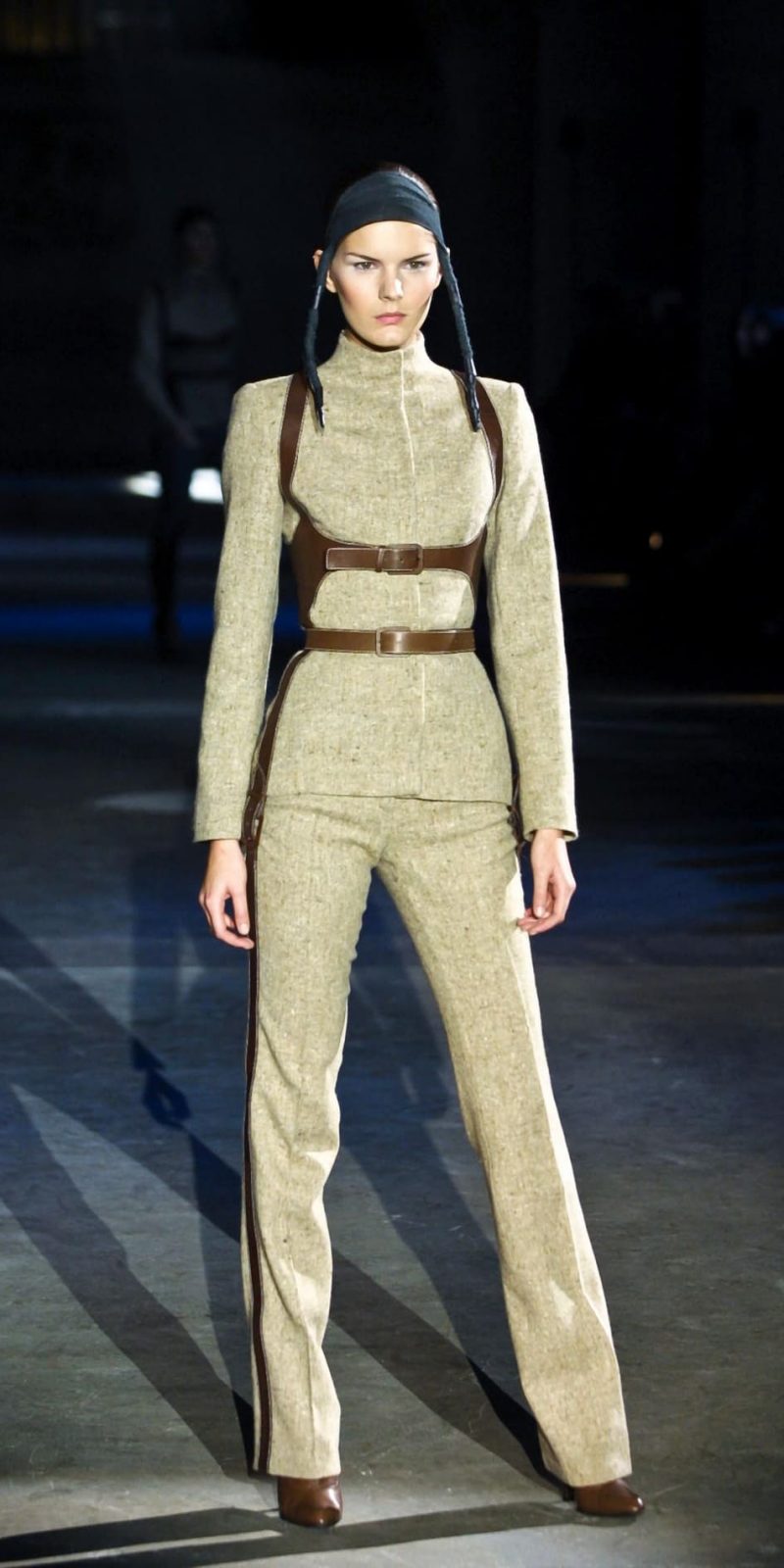
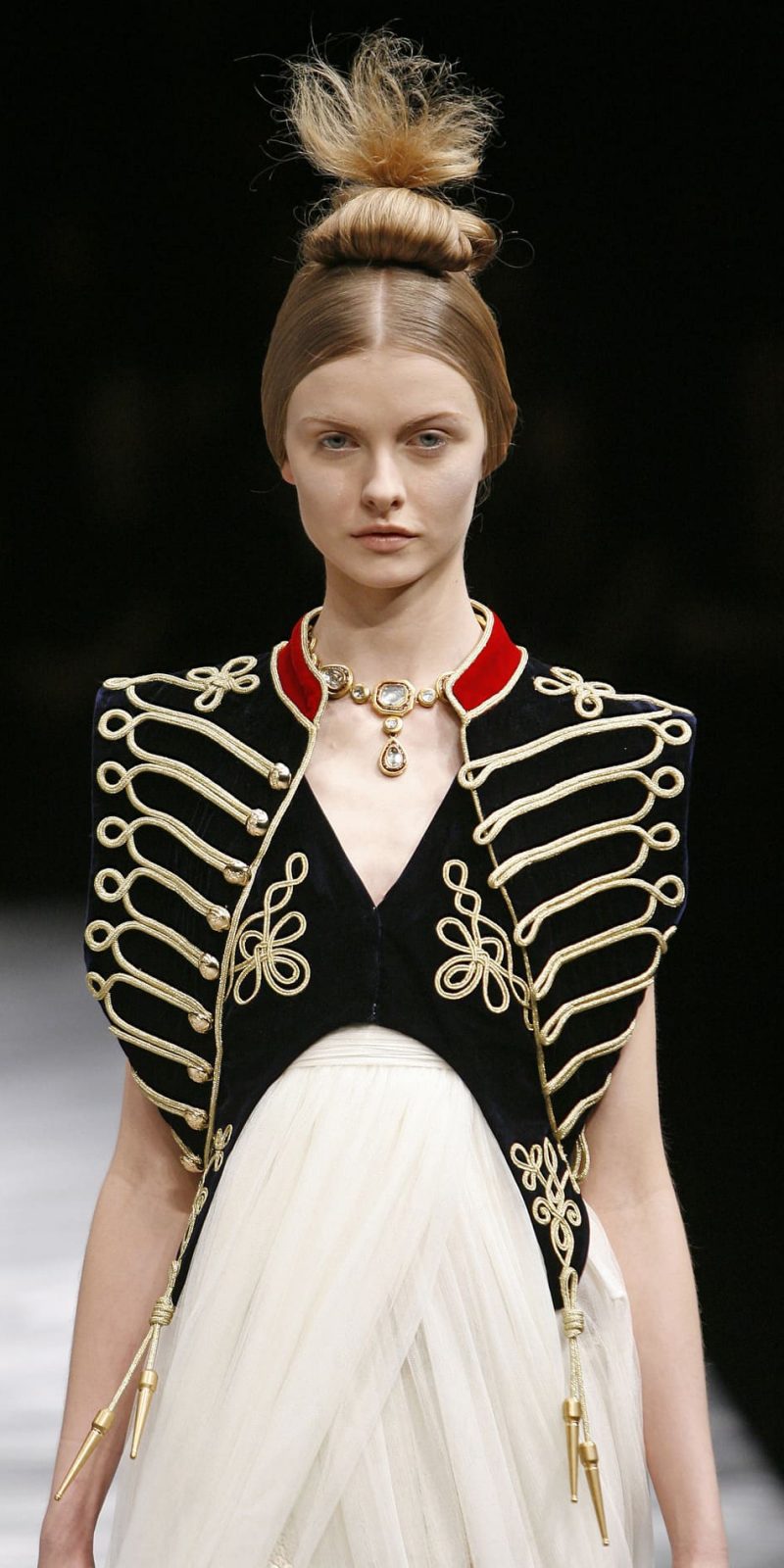
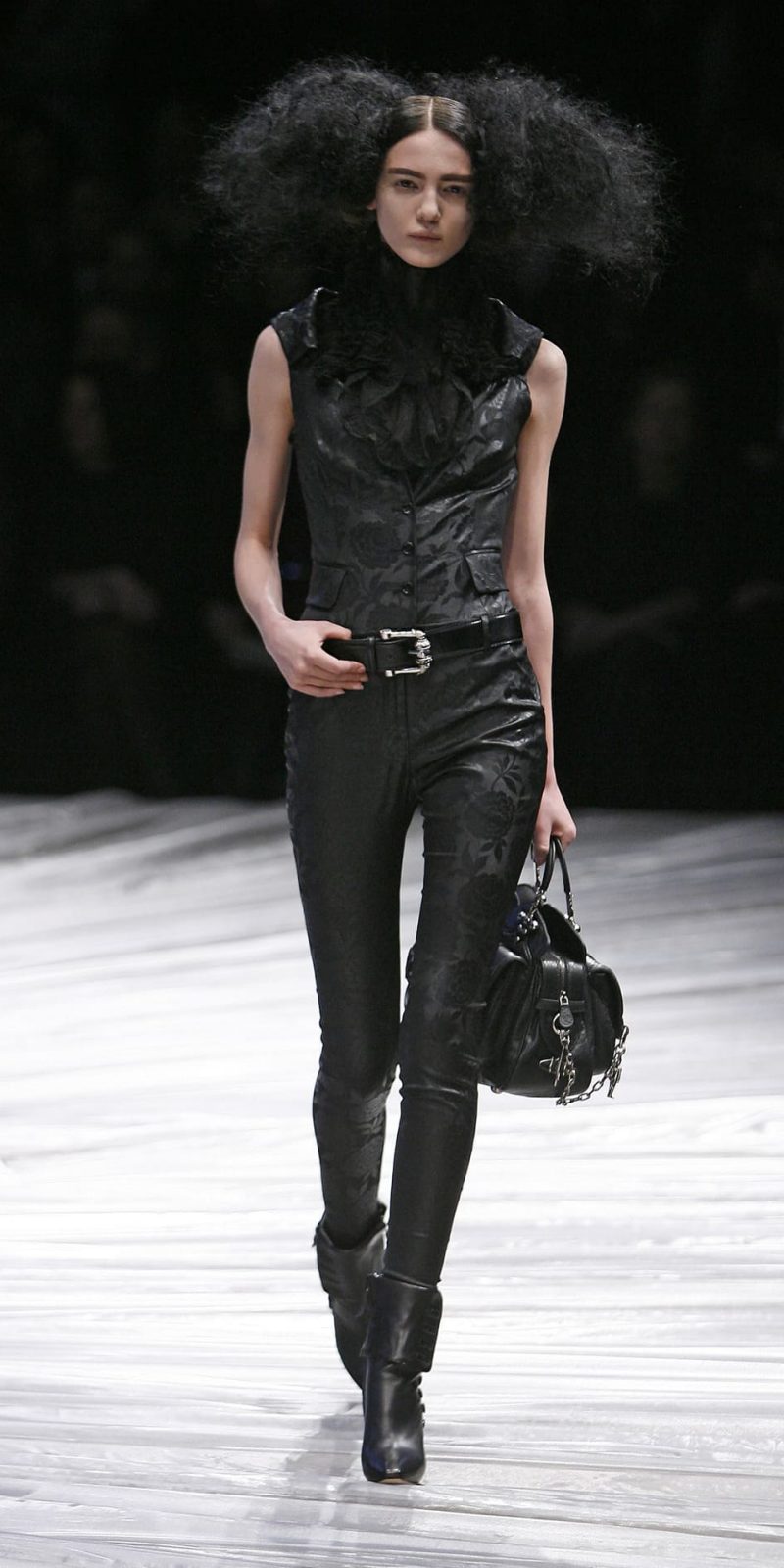
Supercalifragilisticexpialidocious Harness Suit, Autumn / Winter 2002. The Girl Who Lived in the Tree, Empire Jacket and Jumpsuit, Autumn / Winter 2008.
McQUEEN VAULT: Where Voss was serious and confrontational, the Supercalifragilisticexpialidocious show (in part, a creative collaboration with Tim Burton) was a fairytale—albeit one with a typical McQueen BDSM element—his signature creative tension and disregard of convention. Notable—the harnesses, buckles and leather work, where he dressed Carmen Cass in a molded piece covering the mouth like a leather face (which, incidentally, also featured in Salem); rich leather harnesses incorporated fully into suits, which change the structure and carved a new silhouette, highlighting McQueen’s understanding of anatomy.
With McQueen’s The Girl Who Lived in the Tree collection, another exercise in world-building, McQueen invited us into a fairytale, where a princess climbed down out of a tree on a journey to find love and eventually be crowned queen. This collection was universally lauded and was featured in every fashion publication that season due to its high-watt romance and glamor. From its somber beginning, where everything was jet-black slim suits and short dresses, the show transitioned into tartans and checks, and the final chapter burst from the Indian subcontinent, with an explosion of regal themes and silhouettes. This was the transformative collection that people could actually see themselves wearing.
Illusion
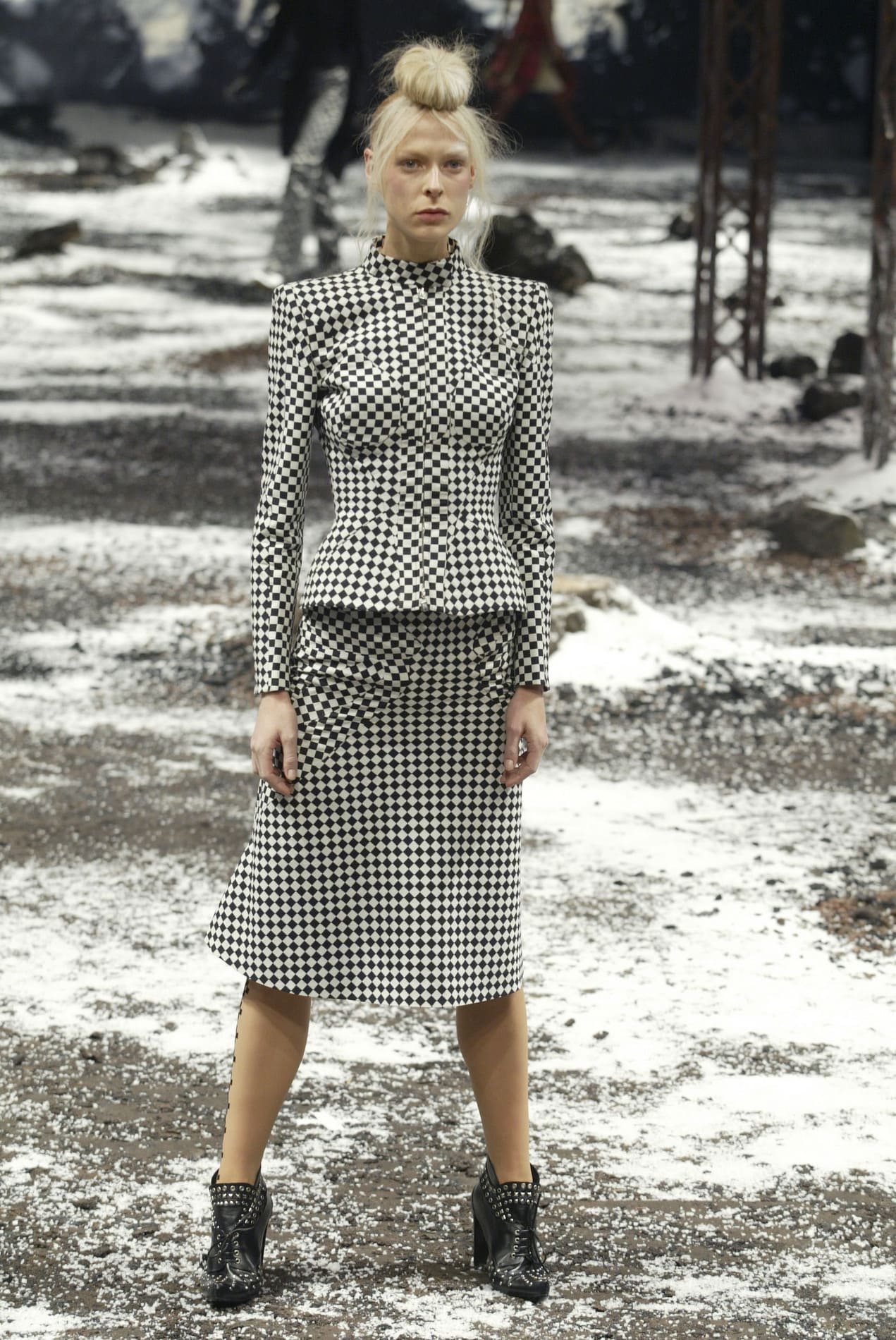
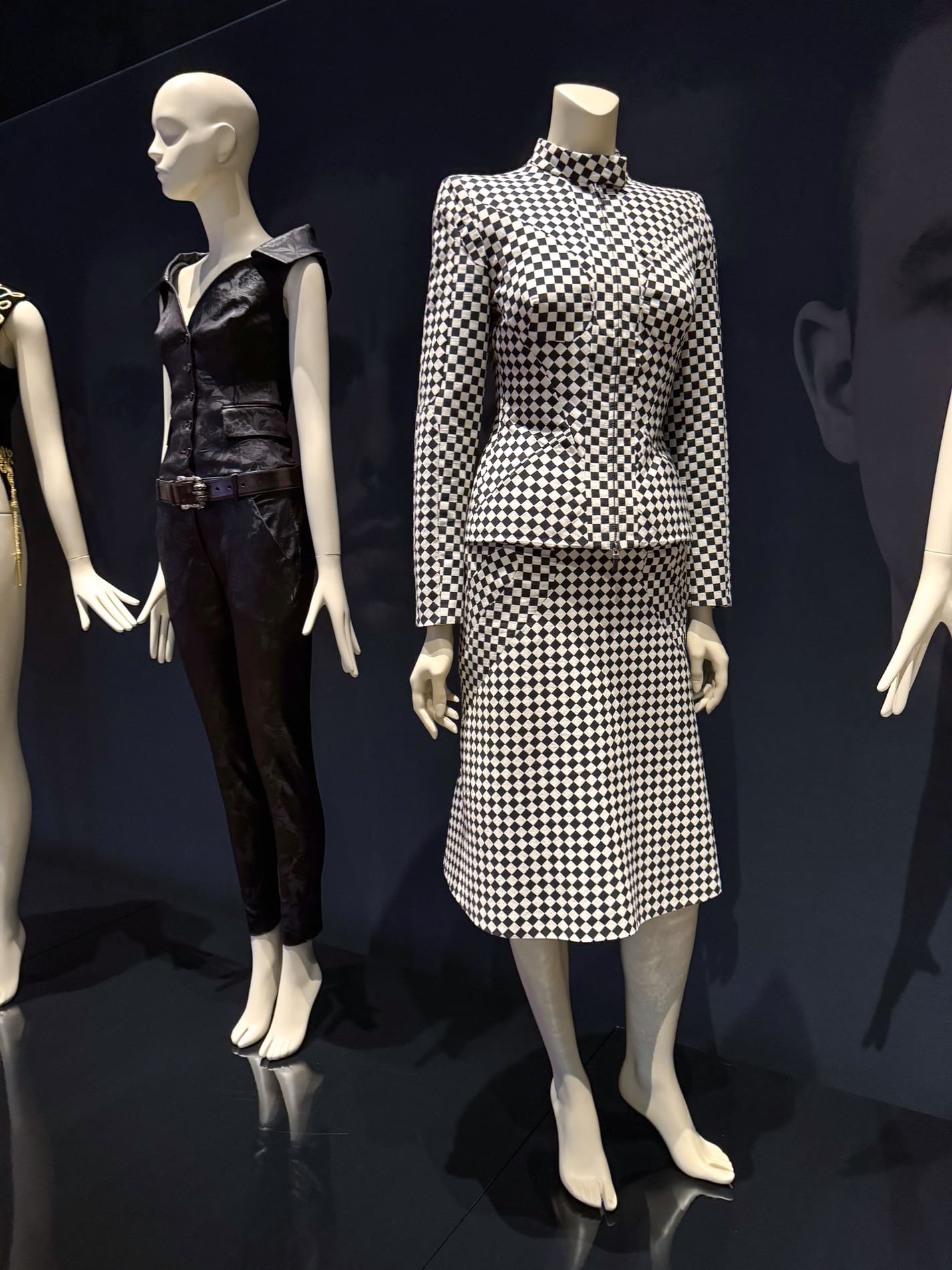
Scanners, Check Suit, Autumn / Winter 2003.
McQUEEN VAULT: McQueen’s Savile Row skills are very visible here, but you can also draw a connection between these garments and his understanding of form and anatomy. The Scanners jacket and skirt have been surgically engineered through curves and panels that partially reference
14th and 15th Century Japanese armor and origami-like shapes. The panels trace the arrangement of muscles in the body and emphasize the natural curves of the hips and shoulders with discreet padding. It’s an incredibly complex garment.
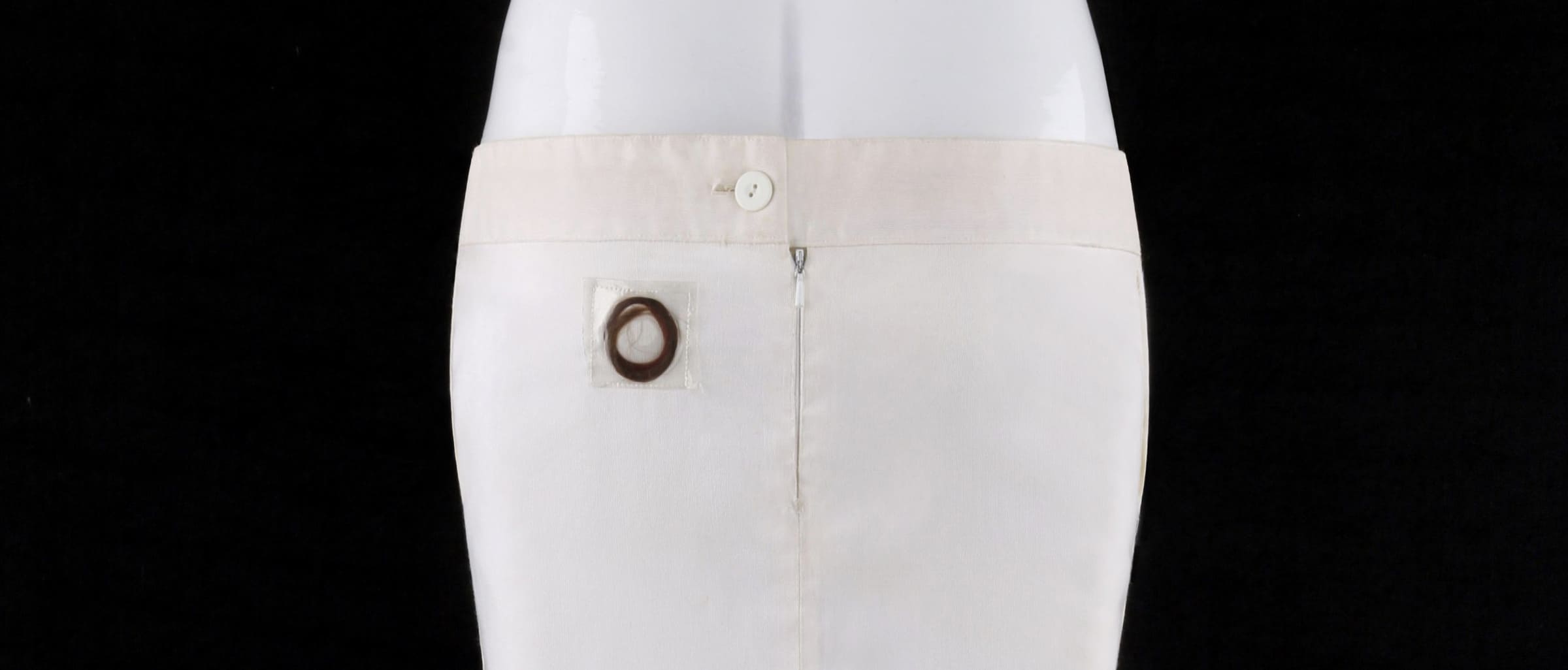
The Birds Bumster Skirt, Spring / Summer 1995
BYRONESQUE: McQueen was a master of creative illusion. Much of his craft and construction wasn’t visible to the naked eye. His ingenuity made things appear simpler than they actually were. He created clothes that might never have been made had it not been for his unique ability to realize complex ideas. This skirt from his The Birds collection shows his mastery of cut and proportion, and the suit from the Scanners collection distorts the body through masterful construction. Ultimately, both changed how people move in clothes.
McQUEEN VAULT: His fascination with the Bumster line showed up throughout his career, and not just in his signature trousers. The silhouette was a constant point of reference in his collections. Such a low waistline was possible because of his sharp eye for proportion. To deliberately make garments sit low, balance was needed in the total design, which is where we see cut-away frock coats or abbreviated jackets. This shifted the eye away from the natural waistline and forever changed fashion as other designers followed his lead. A final detail with this early Bumster skirt is the hair lock label, inspired by Victorian prostitutes selling their hair to make commemorative lockets for loved ones. Who else but McQueen would make this kind of reference? This skirt is like a love letter, the ultimate McQueen memento.
Immortal
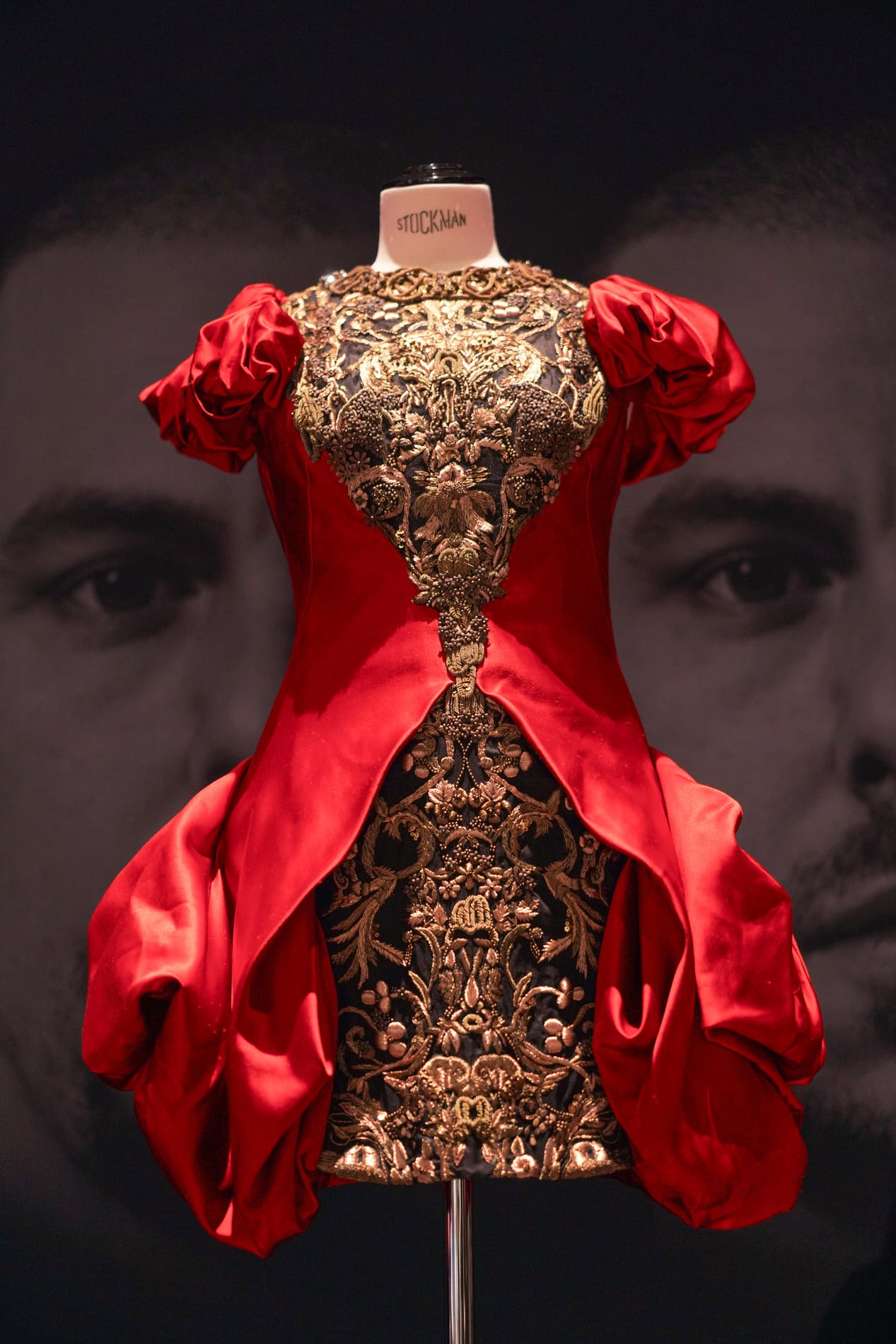
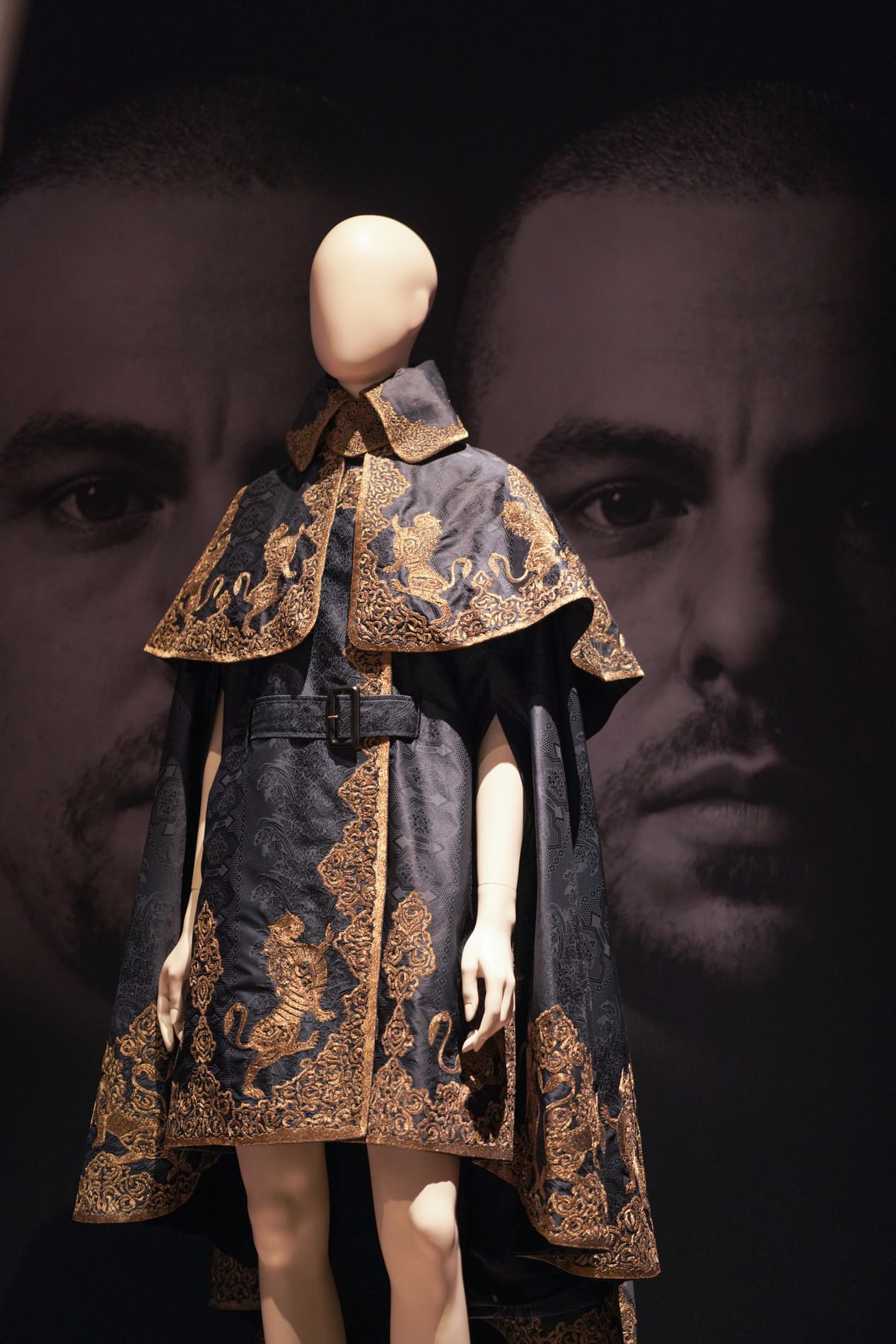
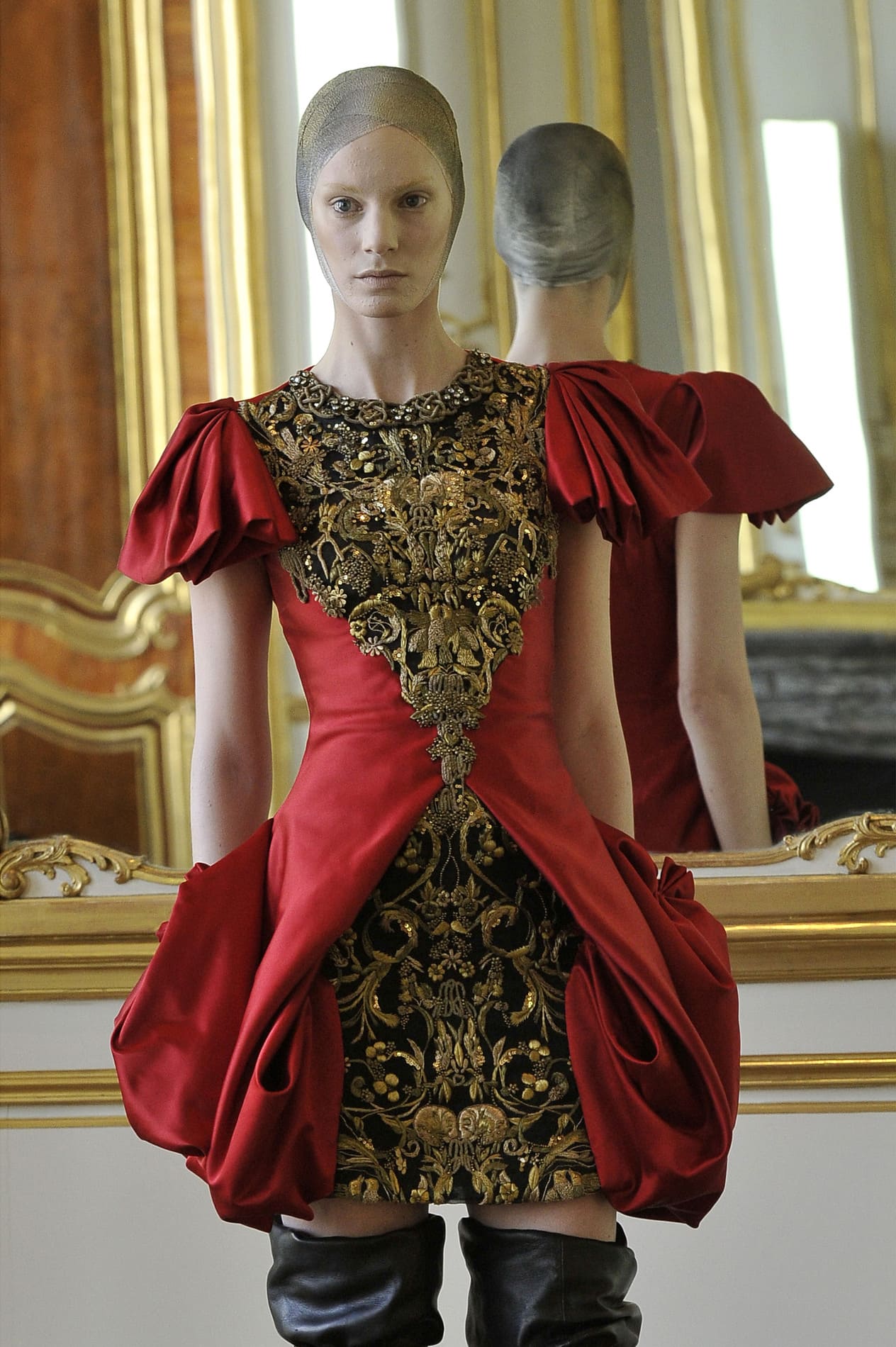
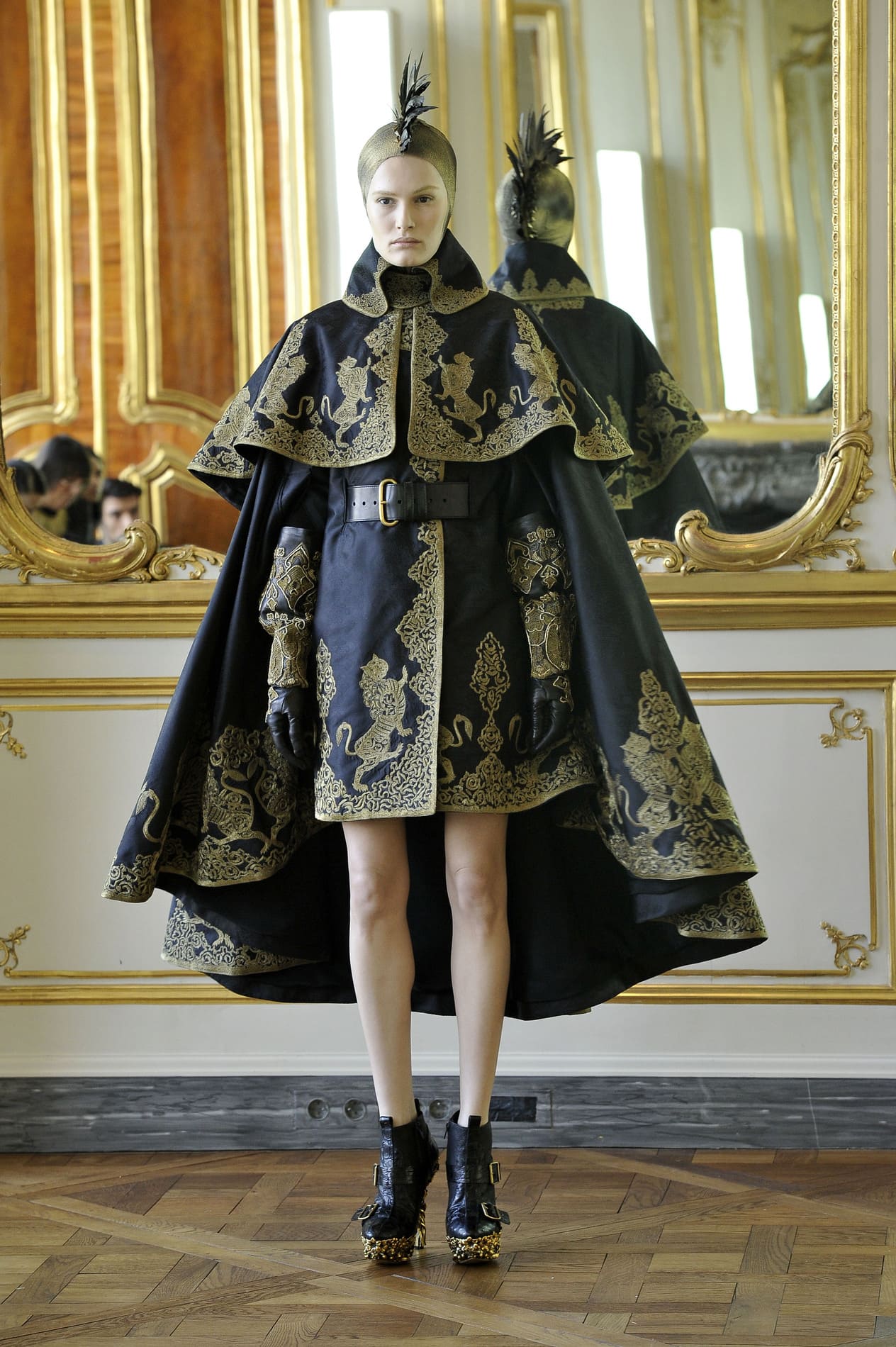
Angels and Demons’ Cape and Dresses, Autumn / Winter 2010
BYRONESQUE: McQueen took inspiration from our collective worst nightmares and gave us clothes that made us dream. His creative legacy comes to life in Angels and Demons, his fearless contribution indelibly sewn into fashion history. His knowledge and sartorial interpretation of historical cultural created a future of fashion that, to quote Jens Peter Jacobsen’s Company of Melancholiacs, is today still “more ardent than that of the common herd.”
McQUEEN VAULT: It fascinates me that McQueen went back to art and craft with Byzantine and Old Masters references after the sci-fi futurism of Plato’s Atlantis. This collection was contemporary haute couture rooted in his legacy, without being officially couture. He was crafting the future by adapting art references with modern fabrics like metallic infused jacquards that replicated intricate oil paintings. In perfect McQueen fashion he revisited his own motifs with a skirt’s cartridge pleats dropped to the Bumster line—same extended torso, elevated by a different technique.
I feel lucky to live alongside the creations of Lee Alexander McQueen. It is critically important to preserve as much of his legacy as possible. His un-finished final AW 2010 collection notes perfectly stated: “Each piece is unique, as was he.” He transcended classification and managed to lead in an industry typically closed to someone with his social identity. His alchemy of pure skill, passion, and vision created something undeniable. Like this showcase inviting viewers to explore beyond this experience, McQueen’s legacy inspires endless reconsideration. His worlds offer escape. His concepts challenge. His ideas ignite resistance. I cannot image a world without his influence.